Education
Is It a Good Time to Start CLAT 2027 Preparation? Suggestions from LegalEdge Experts

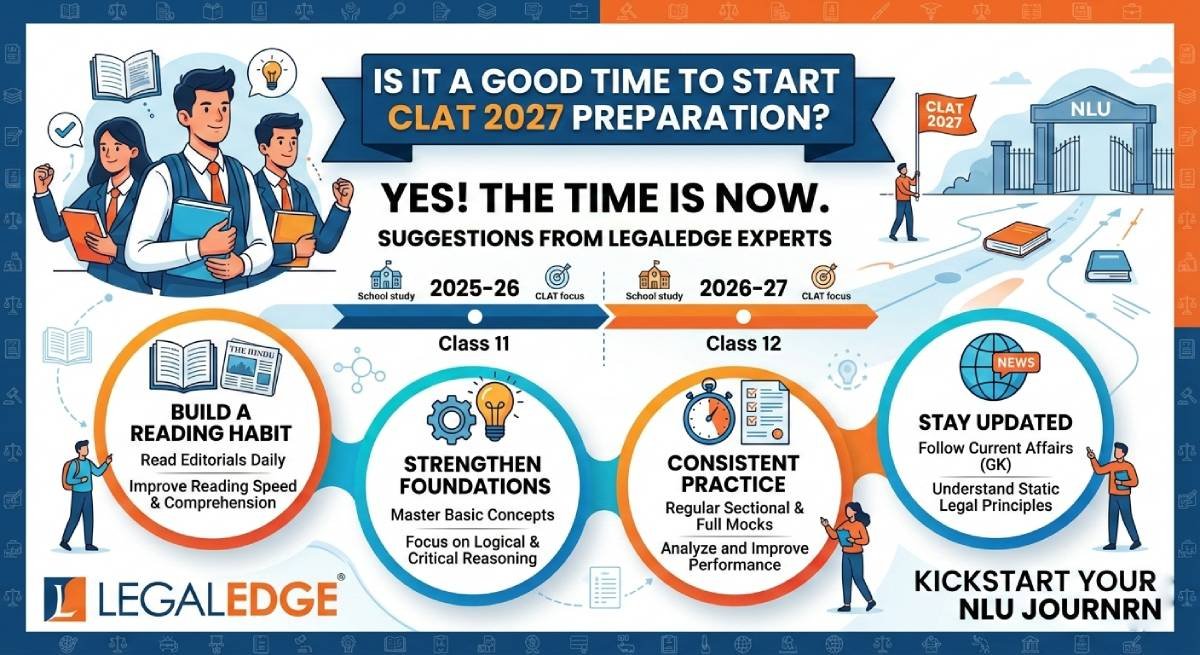
If you’re thinking about CLAT 2027 and wondering, “Is it too early to start?”—here’s the straight answer: yes, it’s a very good time to start. Not because you need to study all day from tomorrow, but because CLAT 2027 is expected to happen in December 2026. That means the exam season arrives faster than most students assume.
Now let’s make this practical. Starting early doesn’t mean doing “everything.” It simply means giving yourself enough runway to build the skills CLAT actually tests—reading, reasoning, accuracy, and the ability to stay calm under time pressure.
First, let’s clear the biggest myth
A lot of students tell themselves:
“I’ll start when the official notification comes.”
But once the notification drops, panic spreads quickly—everyone starts rushing, schedules get aggressive, and many students jump straight into mocks without fixing their basics. LegalEdge mentors often point out that the real advantage comes from starting when the pressure is low, so your skills can grow naturally.
Why starting now makes sense for CLAT 2027 (December 2026)
CLAT isn’t a “memorise and reproduce” exam. It’s a “read, interpret, eliminate options, and move on” exam. That’s why your performance improves in layers:
- Reading stamina (how long you can stay sharp)
- Comprehension speed (how quickly you understand passages)
- Reasoning quality (how accurately you infer and eliminate)
- Decision-making (what to attempt vs what to skip)
- Mock temperament (how you handle pressure and time)
These aren’t overnight changes. Starting now gives you time to build them without burnout.
LegalEdge-style suggestion: Start with a foundation-first plan
Here’s a simple approach LegalEdge experts typically recommend: don’t begin with “finish syllabus.” Begin with “build CLAT skills.” Your prep becomes smoother when the core skills are strong.
1) Build reading like it’s your main subject
If there’s one habit that pays you back every single day, it’s this: read 45–60 minutes daily. Not randomly—read with a purpose.
Try this split:
- 20 minutes: editorials/opinion (The Hindu, Indian Express)
- 20 minutes: long-form reading (features, explainers, essays)
- 10–20 minutes: quick notes (2–3 takeaways + new words)
The goal isn’t to “collect information.” The goal is to train your brain to process dense text quickly, because CLAT is heavily passage-based.
2) Start reasoning early (small, consistent practice)
Students often delay logical reasoning because “it feels tough.” But logical reasoning becomes easier when you practise it frequently in small doses. Do:
- 20–30 minutes per day
- Focus on: assumption, conclusion, inference, strengthen/weaken, statement-argument
In the beginning, don’t chase speed. Chase accuracy and clarity. Speed comes automatically once your logic becomes clean.
3) Legal reasoning: learn the pattern, not just the law
Legal reasoning in CLAT is not about remembering sections. It’s about applying principles to situations. A smart routine looks like this:
- 3 passages a day, 5 days a week
- After solving, ask: “What rule/principle did this rely on?” and “Which fact changed the outcome?”
That’s exactly the thinking CLAT rewards.
Don’t miss this: Solve previous year question papers strategically
CLAT Previous year question papers (PYQs) are your fastest reality check. LegalEdge mentors often recommend starting PYQs early—not to “finish them,” but to understand how CLAT actually asks questions.
How to use PYQs the right way:
- Start section-wise (don’t attempt full paper instantly if you’re a beginner)
- Time yourself even in practice—CLAT is a speed-and-accuracy game
- Analyse deeply: Why was the correct option right? Why were the others wrong?
- Build a mistake list: recurring errors like misreading, rushed elimination, confusion between close options
- Repeat tough sets after a week—this is where improvement becomes visible
Think of PYQs as your “CLAT language training.” They help you learn the exam’s mindset—what it rewards and what it punishes.
The “when to start mocks” question (and the real answer)
Most students either start mocks too late or start too early and get demotivated. The smarter move is to build mock readiness gradually.
A clean progression looks like this:
- Month 1–2: sectional tests + mini-mocks (skill-building mode)
- Month 3 onward: 1 full mock per week
- Last 8–10 weeks: 2–3 mocks per week + serious analysis
And yes—analysis matters more than mock count. One well-analysed mock beats three rushed ones.
A simple weekly starter plan (beginner-friendly)
If you want a routine that feels realistic, try this:
Monday–Friday
- Reading: 45–60 minutes
- Logical reasoning: 30 minutes
- Legal reasoning: 30–40 minutes
- Current affairs: 20–30 minutes (notes + weekly recap)
Saturday
- Sectional test or mini-mock
- Analyse mistakes for 60–90 minutes
Sunday
- Light revision + reading
- 1 PYQ set (section-wise) + analysis
This keeps you consistent without burning out—and you can scale it up as the exam gets closer.
What if you’re in Class 11 / Class 12 / Dropper?
- Class 11: Perfect time to build reading + reasoning habits. Keep mocks light, keep skills strong.
- Class 12: Start structured prep now with regular tests and weekly analysis.
- Dropper: Treat CLAT 2027 like a full-time target. Start mocks earlier, but with strict analysis and a strong PYQ routine.
What “starting now” doesn’t mean
Starting early doesn’t mean:
- studying 8–10 hours daily from day one
- finishing every GK PDF on the internet
- comparing your mock scores with toppers immediately
It means building daily consistency, adding tests gradually, and staying calm while the timeline moves toward December 2026.
Final takeaway
If CLAT 2027 is expected in December 2026, starting now isn’t “early”—it’s smart timing. You give yourself the space to improve steadily, rather than sprinting in panic later.
If you tell me your current stage (Class 11 / 12 / Dropper) and how many hours you can realistically give daily, I can map out a personalized 12-week starter plan with weekly targets, PYQ slots, and mock schedule.


Education today stands at the crossroads of tradition and transformation, where teachers are no longer just instructors but facilitators, mentors, and innovators. An effective educators handbook serves as a guiding compass in this evolving landscape, helping professionals navigate classroom challenges, student diversity, and technological advancements. Whether you are a new teacher stepping into your first classroom or a seasoned educator refining your methods, having a structured approach can significantly enhance your impact. This comprehensive guide explores essential strategies, insights, and frameworks that empower educators to create meaningful learning experiences. By understanding both foundational principles and modern techniques, teachers can foster environments where students thrive academically, emotionally, and socially.
Understanding the Purpose of an Educators Handbook
An educators handbook is more than just a collection of teaching tips; it is a structured framework that defines the philosophy, strategies, and responsibilities of effective teaching. At its core, it provides clarity and direction, ensuring educators align their methods with learning objectives and institutional goals. This resource helps teachers establish consistency in classroom management, lesson planning, and student engagement while also adapting to diverse learning needs. It acts as both a reference and a roadmap, allowing educators to reflect on their practices and continuously improve.
In addition, a well-crafted educators handbook supports professional growth by offering insights into pedagogy, assessment techniques, and communication strategies. It bridges the gap between theory and practice, making educational concepts more applicable in real-world classrooms. By integrating research-based methods with practical examples, the handbook becomes an essential tool for fostering confidence and competence. Ultimately, it empowers teachers to make informed decisions that positively influence student outcomes and overall educational quality.
Will You Check This Article: Severna Dakota Travel Guide and Living Insights
Core Principles of Effective Teaching Practices
Effective teaching is grounded in principles that prioritize student-centered learning, adaptability, and continuous improvement. One of the most important principles is understanding that every student learns differently. Teachers must design lessons that cater to varied learning styles, including visual, auditory, and kinesthetic approaches. By doing so, educators can create inclusive environments where all students feel valued and capable of success. This principle encourages flexibility and innovation in lesson delivery.
Another critical aspect is maintaining clear communication and setting achievable expectations. Students perform better when they understand objectives and receive consistent feedback. Building strong relationships also plays a vital role, as trust and respect foster a positive learning atmosphere. When teachers combine these principles with reflective practices, they can identify strengths and areas for growth. This continuous cycle of evaluation and improvement ensures that teaching remains dynamic and effective over time.
Classroom Management Strategies That Work
Classroom management is one of the most challenging yet essential components of teaching. A well-managed classroom creates a safe and productive environment where students can focus on learning without unnecessary disruptions. Establishing clear rules and expectations from the beginning is crucial. These guidelines should be consistent, fair, and communicated effectively to students, ensuring they understand the boundaries and consequences.
Equally important is fostering a positive classroom culture that encourages respect and collaboration. Teachers can use strategies such as positive reinforcement, structured routines, and active engagement to maintain order. Addressing behavioral issues promptly and constructively helps prevent escalation and builds mutual understanding. Effective classroom management is not about control but about creating an environment where students feel motivated and responsible for their own learning journey.
Integrating Technology in Modern Education
Technology has revolutionized the way education is delivered, making learning more interactive, accessible, and engaging. Digital tools such as online platforms, multimedia resources, and educational apps allow teachers to diversify their teaching methods and reach students more effectively. Incorporating technology into lessons can enhance understanding by providing visual and interactive experiences that traditional methods may not offer.
However, successful integration requires thoughtful planning and balance. Teachers must ensure that technology complements learning objectives rather than distracting from them. Training and continuous learning are essential for educators to stay updated with emerging tools and trends. By leveraging technology wisely, educators can create dynamic classrooms that prepare students for the digital age while maintaining the core values of education.
Designing Engaging Lesson Plans
A well-designed lesson plan is the backbone of effective teaching. It provides structure and direction, ensuring that learning objectives are met while keeping students engaged. Successful lesson planning involves setting clear goals, selecting appropriate materials, and incorporating activities that stimulate critical thinking. Teachers should aim to create lessons that are both informative and interactive, allowing students to actively participate in the learning process.
Engagement is key to retention, and incorporating diverse teaching methods can significantly enhance student interest. Group discussions, hands-on activities, and real-world applications make lessons more relatable and memorable. Additionally, flexibility in lesson planning allows teachers to adapt to unexpected challenges or student needs. By continuously refining their approach, educators can ensure that their lessons remain relevant and impactful.
Assessment and Evaluation Techniques in the Educators Handbook
Assessment is a vital component of the educators handbook, providing insights into student progress and the effectiveness of teaching strategies. Traditional methods such as exams and quizzes are still valuable, but modern education emphasizes a more holistic approach. Formative assessments, peer evaluations, and project-based learning offer deeper insights into student understanding and skills development.
Effective evaluation goes beyond grading; it involves providing constructive feedback that guides students toward improvement. Teachers should focus on identifying strengths and addressing weaknesses while encouraging self-reflection. By using a variety of assessment techniques, educators can gain a comprehensive understanding of student performance. This approach not only enhances learning outcomes but also fosters a growth mindset among students.
Building Strong Teacher-Student Relationships
The relationship between teachers and students is a cornerstone of successful education. When students feel respected and supported, they are more likely to engage actively in the learning process. Building strong relationships requires empathy, patience, and effective communication. Teachers must create an environment where students feel comfortable expressing their thoughts and asking questions.
Trust is developed through consistency and genuine care for student well-being. By understanding individual needs and providing personalized support, educators can foster a sense of belonging. This connection not only improves academic performance but also contributes to emotional and social development. Strong teacher-student relationships are essential for creating a positive and inclusive learning environment.
Conclusion
An educators handbook is an indispensable resource that shapes the foundation of effective teaching and learning. It provides guidance, structure, and inspiration, enabling educators to navigate the complexities of modern education with confidence. By incorporating proven strategies, embracing innovation, and fostering meaningful connections, teachers can create impactful learning experiences that extend beyond the classroom.
Ultimately, the value of an educators handbook lies in its ability to evolve with changing educational needs while maintaining core principles. It empowers teachers to adapt, grow, and excel in their profession, ensuring that students receive the highest quality education. As education continues to transform, this comprehensive guide remains a vital tool for shaping the future of learning and empowering the next generation.
Read More: Dollartimes.co.uk

Education is the backbone of every successful society, and it all begins at the earliest stages of learning. The concept of osnovno uciliste plays a crucial role in shaping young minds, providing not just academic knowledge but also life skills that last forever. Think about it—our earliest school experiences influence how we think, behave, and interact with the world around us. From learning to read and write to developing friendships and discipline, this phase is where everything starts to take form. It’s not just about textbooks; it’s about creating a well-rounded individual. In this article, we’ll explore why this foundational stage of education matters so much and how it impacts personal and societal growth.
Understanding the Role of Osnovno Uciliste in Early Education
The journey of learning begins with curiosity, and that curiosity finds direction in structured environments like osnovno uciliste. At this level, children are introduced to the basic building blocks of knowledge, including literacy, numeracy, and critical thinking. These early lessons are not just academic exercises; they are tools that help children understand the world around them. A child learning how to read is also learning how to interpret information, express thoughts, and engage with ideas in meaningful ways.
Beyond academics, this stage focuses heavily on emotional and social development. Children learn how to interact with peers, respect authority, and build confidence in their abilities. It’s like planting seeds in fertile soil—what grows later depends on how well these seeds are nurtured. Teachers act as guides, shaping not only what students learn but also how they approach challenges and opportunities. This holistic approach ensures that students are not just prepared for exams but for life itself.
Will You Check This Article: Clipzag: Features, Uses, and Its Digital Influence
Core Curriculum and Learning Structure in Primary Schools
The curriculum in primary education is carefully designed to balance knowledge and skill development. Subjects like mathematics, science, and language are introduced in ways that are engaging and easy to understand. The goal is not to overwhelm students but to gradually build their understanding through interactive methods. Storytelling, games, and hands-on activities make learning enjoyable and memorable.
Another important aspect is the integration of creative subjects such as art and music. These subjects may seem secondary, but they play a vital role in enhancing cognitive abilities and emotional expression. A child drawing a picture or singing a song is also learning coordination, creativity, and self-expression. This balanced approach ensures that every child has the opportunity to discover their strengths and interests, making education a more personalized experience.
The Importance of Teachers in Shaping Young Minds
Teachers are the heart of any educational system, and their role becomes even more significant at the primary level. They are not just instructors; they are mentors, role models, and sometimes even caregivers. A good teacher can inspire a lifelong love for learning, while a negative experience can have the opposite effect. This is why the quality of teaching is so critical in osnovno uciliste environments.
Effective educators understand that every child is unique and learns differently. They adapt their teaching methods to meet the needs of diverse learners, ensuring that no one is left behind. Patience, empathy, and creativity are key traits that define successful teachers. By creating a supportive and encouraging environment, they help students overcome challenges and build confidence in their abilities. Their influence often extends far beyond the classroom, shaping attitudes and values that last a lifetime.
Social Development and Emotional Intelligence in Early Schooling
One of the most overlooked aspects of early education is its role in developing social skills and emotional intelligence. Children learn how to share, cooperate, and resolve conflicts in a structured environment. These interactions are essential for building relationships and understanding different perspectives. It’s like a mini society where students practice the skills they will use throughout their lives.
Emotional intelligence is equally important, as it helps children understand and manage their feelings. Teachers often incorporate activities that encourage self-expression and empathy, such as group discussions and storytelling. These experiences help children develop a sense of self-awareness and compassion for others. In a world that increasingly values collaboration and communication, these skills are just as important as academic knowledge.
Modern Challenges Facing Primary Education Systems
Despite its importance, primary education faces several challenges in today’s rapidly changing world. One major issue is the integration of technology in classrooms. While digital tools offer new opportunities for learning, they also require careful management to ensure they are used effectively. Too much screen time can be distracting, while too little can leave students unprepared for a digital future.
Another challenge is ensuring equal access to quality education for all students. Socioeconomic factors often play a significant role in determining the resources available to schools and students. This can create disparities in learning outcomes, making it difficult to provide a level playing field. Addressing these challenges requires collaboration between governments, educators, and communities to create inclusive and effective educational systems.
The Impact of Parental Involvement on Student Success
Parents play a crucial role in supporting their children’s education, especially during the early years. When parents are actively involved, children are more likely to perform well academically and develop positive attitudes toward learning. Simple actions like helping with homework, attending school events, and encouraging curiosity can make a big difference.
The relationship between parents and teachers is also important. Open communication ensures that both parties are aware of the child’s progress and any challenges they may face. This partnership creates a supportive environment that reinforces learning both at school and at home. It’s like a team effort where everyone works together to ensure the child’s success.
Innovations and Future Trends in Basic Education
Education is constantly evolving, and primary schooling is no exception. Innovative teaching methods and technologies are transforming the way children learn. Interactive whiteboards, educational apps, and online resources are making lessons more engaging and accessible. These tools allow teachers to present information in creative ways, catering to different learning styles.
Another emerging trend is the focus on personalized learning. Instead of a one-size-fits-all approach, educators are increasingly tailoring lessons to meet the individual needs of students. This ensures that each child can learn at their own pace and reach their full potential. As education continues to evolve, the goal remains the same: to provide a strong foundation for lifelong learning.
Conclusion
The importance of osnovno uciliste cannot be overstated, as it lays the groundwork for everything that follows in a person’s educational journey. It’s where children learn not just academic skills but also values, habits, and attitudes that shape their future. In a world that is constantly changing, the need for strong foundational education is more critical than ever.
By investing in quality primary education, societies can ensure that future generations are equipped to face challenges and seize opportunities. Whether it’s through dedicated teachers, supportive parents, or innovative approaches, every effort counts in building a better educational system. At its core, this stage of learning is about nurturing potential and preparing young minds for a lifetime of growth and success.
Read More: Dollartimes.co.uk

Duaction is an emerging concept that merges digital interaction with educational innovation, creating a platform where learning and engagement happen seamlessly. It’s not just a technological tool—it’s a revolution in the way people learn, collaborate, and communicate in the modern digital age. With increasing demand for personalized learning and remote collaboration, duaction is set to become a central part of both educational institutions and corporate training programs.
Will You Check This Article: Adsy.pw/hb3: Understanding Short URL Trends & Online Safety
The Origin of Duaction
The concept of duaction emerged from the need to bridge the gap between traditional education and modern technology. Educators and tech innovators observed that students often struggle with passive learning methods, prompting the development of interactive platforms that encourage active participation. Duaction combines elements of gamification, virtual reality, AI-driven analytics, and social interaction to create an immersive learning experience.
How Duaction Works
At its core, duaction works by blending digital tools with learning objectives. Users engage with content through interactive modules, quizzes, and real-time feedback systems. Unlike conventional online courses, emphasizes collaboration, instant performance tracking, and adaptive learning paths. This means every user gets a personalized experience that adapts to their strengths, weaknesses, and learning pace.
Key Features of Duaction
Some of the standout features of include:
- Interactive Learning Modules – Lessons are designed like games, making learning fun.
- AI-Powered Recommendations – Suggests the best resources based on user performance.
- Real-Time Collaboration – Students and teams can work together in virtual environments.
- Performance Analytics – Tracks progress and provides actionable insights.
- Multi-Device Access – Works on laptops, tablets, and mobile devices.
These features make more than just an educational tool—it’s a full learning ecosystem.
The Role of AI in Duaction
Artificial Intelligence (AI) plays a crucial role in by analyzing user behavior, predicting learning patterns, and offering personalized recommendations. AI ensures that students remain engaged by adjusting difficulty levels, suggesting targeted content, and even identifying areas that need improvement. This reduces learning friction and increases retention, making the learning process more efficient and effective.
Gamification and Engagement
One of duaction’s most compelling aspects is gamification. Learning is no longer boring or passive; it becomes a challenge, a game where users earn points, badges, and rankings. This approach increases motivation, encourages participation, and builds a sense of community among learners. Gamification in duaction taps into human psychology, making education addictive in a positive and productive way.
Duaction for Schools and Universities
For academic institutions, offers a modern alternative to traditional classrooms. Teachers can create interactive assignments, track progress, and provide instant feedback. Students benefit from a dynamic learning environment where concepts are easier to grasp through visuals, simulations, and collaborative exercises. also supports blended learning, allowing schools to combine online and offline instruction seamlessly.
Duaction in Corporate Training
Corporate training has evolved, and is at the forefront of this transformation. Companies can train employees efficiently, track performance, and adapt content to meet specific organizational needs. With, onboarding programs, skill development, and compliance training become interactive and measurable. Employees remain engaged, and organizations can ensure higher ROI on training investments.
Accessibility and Inclusivity
Duaction is designed with accessibility in mind, ensuring learners from diverse backgrounds can participate. Features such as text-to-speech, multi-language support, and customizable interfaces allow users with disabilities to engage fully. Inclusivity is central to duaction’s philosophy, promoting equitable learning opportunities for everyone.
The Technology Behind Duaction
Duaction leverages cloud computing, AI algorithms, VR/AR technologies, and robust cybersecurity measures. Cloud computing ensures users can access content anytime, anywhere, while VR/AR provides immersive simulations that mimic real-world scenarios. AI algorithms analyze learning behaviors, and cybersecurity protects user data, ensuring a safe and seamless experience.
Benefits of Duaction
Duaction offers multiple benefits across educational and corporate landscapes:
- Personalized Learning – Tailored content for each learner.
- Increased Engagement – Gamified and interactive modules.
- Flexibility – Learn anytime, anywhere.
- Collaborative Learning – Encourages teamwork and knowledge sharing.
- Data-Driven Insights – Analytics to improve learning outcomes.
These benefits make a must-have tool for future-ready learning environments.
Challenges and Limitations
While duaction has many advantages, it’s not without challenges. Some common limitations include:
- High Initial Costs – Implementation can be expensive.
- Digital Literacy Requirements – Users must be tech-savvy.
- Internet Dependency – Requires stable internet for optimal performance.
- Content Overload – Too many features can overwhelm users.
Addressing these challenges requires careful planning, training, and phased adoption.
Duaction and Lifelong Learning
Duaction isn’t just for students or employees—it’s a platform for lifelong learning. Professionals, hobbyists, and enthusiasts can use it to acquire new skills, explore subjects, and stay relevant in a fast-changing world. The adaptive nature of ensures that learners can grow continuously without being constrained by traditional learning structures.
Future of Duaction
The future of looks promising. As technology evolves, we can expect more immersive virtual environments, AI-driven personalization, and integration with IoT devices. Education and training will become more experiential, efficient, and engaging, making a cornerstone of the knowledge economy.
Conclusion
Duaction represents a paradigm shift in how we approach learning and interaction. By blending technology, gamification, AI, and collaboration, it creates a dynamic, engaging, and personalized learning environment. From schools and universities to corporate training and lifelong learning, is shaping the future of education and professional development.
FAQs
1. What exactly is duaction?
Duaction is a digital platform that combines interactive learning, AI personalization, and collaboration to enhance education and training experiences.
2. How does duaction differ from traditional e-learning?
Unlike standard e-learning, focuses on gamification, real-time collaboration, adaptive learning paths, and performance analytics.
3. Can duaction be used in corporate settings?
Yes, it’s ideal for employee training, skill development, onboarding programs, and compliance training with measurable outcomes.
4. Is duaction accessible for learners with disabilities?
Absolutely. Features like text-to-speech, customizable interfaces, and multi-language support make it inclusive.
5. What is the future potential of duaction?
The platform is evolving toward more immersive virtual experiences, AI-driven personalization, and seamless integration across educational and professional domains.

UA82 Emergency: Inside the Dramatic Mid-Air Crisis

Pedrovazpaulo: A Deep Dive Into Digital Identity Growth

King Cheesecake Recall: What Consumers Need to Know Now

Funniest Footnotes That Turn Serious Writing Into Comedy Gold

The Ultimate Educators Handbook for Modern Teaching

Severna Dakota Travel Guide and Living Insights

Raussan: A Practical Guide to Meaning and Use

irri sys: Smart Irrigation for Better Farming

Hyperfiksaatio: Meaning, Signs, and Real-Life Impact

Fraboc Cookware Guide for Everyday Kitchen Use

Adsy.pw/hb3: Understanding Short URL Trends & Online Safety

Simpcitt: Exploring the Rise of Digital Fan Culture

Trucofax: The Digital Hub Reinventing Smart Information Access

Mannacote: Understanding the Digital Term Shaping Modern Trends

Stormuring: Understanding the Rising Trend and Its Impact

XT Labs Steroids: Reviews, Quality & Where to Buy

Garforfans: A Complete Guide to the Rising Digital Trend

Sosoactive: The Ultimate Guide to a More Engaging Life

Sodiceram: Unlocking a New Era in Cellular Health

kracensoft.com: A Practical Look at a Growing Digital Platform
UA82 Emergency: Inside the Dramatic Mid-Air Crisis
Pedrovazpaulo: A Deep Dive Into Digital Identity Growth
King Cheesecake Recall: What Consumers Need to Know Now
Adsy.pw/hb3: Understanding Short URL Trends & Online Safety
Simpcitt: Exploring the Rise of Digital Fan Culture
Trucofax: The Digital Hub Reinventing Smart Information Access
-
 Digital Marketing3 weeks ago
Adsy.pw/hb3: Understanding Short URL Trends & Online Safety
-
 Digital Marketing3 weeks ago
Simpcitt: Exploring the Rise of Digital Fan Culture
-
 Tech3 weeks ago
Trucofax: The Digital Hub Reinventing Smart Information Access
-
 Food & Drinks3 weeks ago
Mannacote: Understanding the Digital Term Shaping Modern Trends
-
 Tech3 weeks ago
Stormuring: Understanding the Rising Trend and Its Impact
-
 Health3 weeks ago
XT Labs Steroids: Reviews, Quality & Where to Buy
-
 Entertainment3 weeks ago
Garforfans: A Complete Guide to the Rising Digital Trend
-
 Social Media3 weeks ago
Sosoactive: The Ultimate Guide to a More Engaging Life