
Tech
Avoid Costly Surgical Revisions with Precision 5-Axis Machined Medical Implants

Introduction
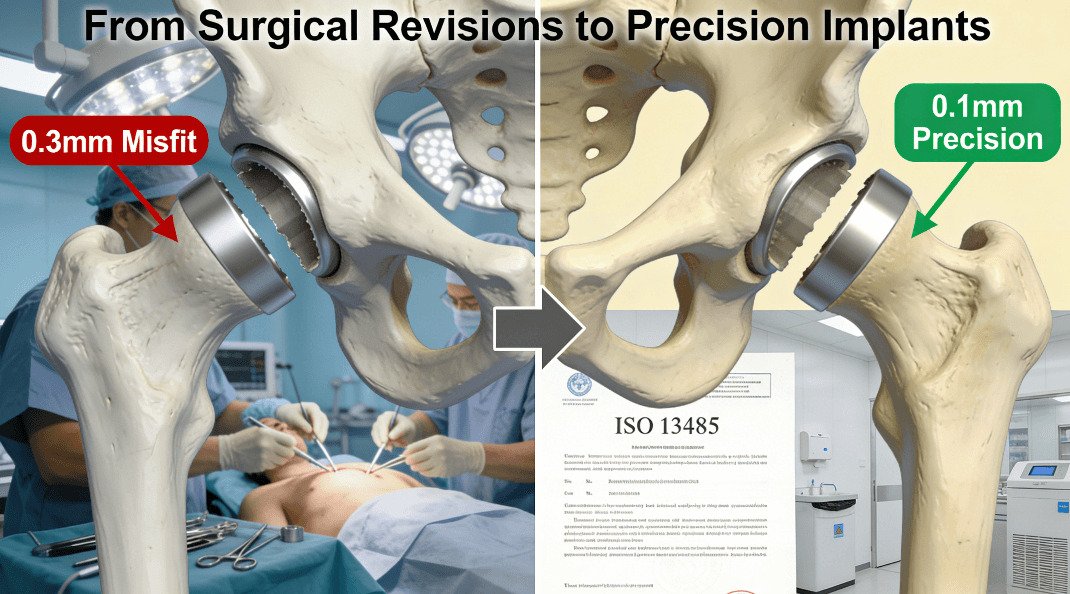
The medical device industry is facing an unprecedented and costly issue with custom implants that experience over 0.3mm misfit with the patient’s anatomy. This directly translates to surgical revisions and increases healthcare costs. The issue has been exacerbated by the inability of 3-axis CNC machining to consistently meet the needs of complex and patient-specific geometries. There is an unmet precision need. The issue stems from the absence of an overarching methodology that combines 5-axis technology with robust quality certifications, such as ISO 13485, and biocompatibility testing.
This article will show that an overarching methodology that combines 5-axis CNC machining addresses the fundamental issues of micron-level precision and surface finish, and durability of sterilization.
What Are the Critical Technical Hurdles in Medical Device Manufacturing That 5-Axis CNC Solves?
The medical device manufacturing industry is facing an unprecedented challenge that requires sub-micron precision and surface finish. The challenges with the current technology are fundamental and are addressed by 5-axis CNC machining.
1.The Limitations of Multi-Setup Machining on Geometric Accuracy
The 3-axis machining process involves multiple part repositions in order to achieve the machining of complex geometries. This results in positional inaccuracy, as each machining setup provides an independent datum point. This results in cumulative inaccuracy, which may even exceed the 0.3mm tolerance limit. This inconsistency in part geometry is the main reason for poor anatomical fit, thereby necessitating intraoperative corrections. The single setup advantage of 5-axis machining completely removes this inaccuracy by machining the entire part in relation to a single datum point.
2. Achieving Superior Surface Finishes for Biocompatibility
In 3-axis machining processes, achieving a surface finish with an average roughness Ra ≤ 0.4 µm is extremely challenging. This stems from the characteristics of linear machining processes — inefficient tool movements may be required to form sharp features, necessitating secondary machining operations, which can lead to deviations in critical dimensional parameters. Through 5-axis medical device manufacturing, manufacturers can achieve direct machining of surfaces with Ra 0.4 µm because it maintains the optimal relative position between the tool and the workpiece surface, enabling smooth cutting movements. This advantage is particularly important when machining implant-grade surfaces, ensuring both surface finish and part accuracy..
3. Overcoming Tool Accessibility and Vibration in Complex Structures
Cavities and undercuts are common in lightweight and porous bone implants. These are difficult to machine using 3-axis machining. The designer has to compromise on the design. 5-axis machining overcomes this difficulty. The tool length and rigidity are improved by tilting the workpiece. This improves machining stability. The complex lattice structures are critical in bone implants. These are required for bone ingrowth. The machining stability is critical in machining these complex structures without tool deflection and breaking.
How Does ISO 13485 Certification Enhance Precision and Traceability in CNC Processes?
It is believed that precision machining depends only on the equipment. However, precision machining depends on an effective quality management system. ISO 13485:2016 is the standard that provides this foundation.

- Establishing a Framework for Process Validation and Control: While other quality systems are generic and applicable to many industries, ISO 13485</strong> is unique in that its requirements are specifically and exclusively relevant to the medical device sector. It calls for validation of every critical process that goes into the manufacturing of medical devices. This includes the validation of CNC machining parameters, tool life management strategies, and inspection methodologies. This means that the cutting speed and tool path that have been validated and shown to produce an Ra 0.4µm surface finish must be followed and adhered to.
- Ensuring Full Traceability for Risk Management and UDI Compliance: In case of an issue with the device after deployment in the market, traceability of the device back to its raw material origin, machining equipment, and machining personnel is critical. ISO 13485 calls for traceability that links every device back to its entire manufacturing history. This is critical and cannot be overemphasized. It is also highly relevant and compliant with the regulations that call for Unique Device Identification. This level of control and traceability is critical in ensuring that implants are manufactured with the specifications that are unique and relevant to individual patients.
- Integrating Real-Time SPC for Proactive Quality Assurance: A certified system features Statistical Process Control (SPC) integrated into production. Key dimensions and surface finishes are measured in real-time, with data analysis to recognize trends toward tolerance limits. This is a proactive quality assurance process that enables adjustments to be made before producing any defective parts. The process is a “prevent and assure” approach, as opposed to a “detect and scrap” approach. This is a foundational component in achieving a zero defect mindset, a necessity in medical device manufacturing.
What Strategies Ensure Sub-Micron Surface Finishes for Successful Osseointegration?
Osseointegration is the biological bonding between the implant and the bone tissue. This process is largely influenced by the surface properties of the implant. Sub-micron surface finish is a prerequisite, and this is accomplished with a multi-step machining process.
1. Optimized Dynamic Toolpaths and Tool Selection
The basis of an exceptional finish starts with the CAM programming stage of the machine. High-end 5-axis toolpaths use constant scallop height techniques, which provide smooth, non-stop motion in the direction of the cut, thus eliminating witness lines. In addition to this, the use of micro-grain carbide tools with certain coatings prevents the formation of built-up edge, thus allowing faster cutting speeds to achieve a predictable, uniform finish directly from the machine.
2. Multi-Axis Mechanical Polishing and Micro-Finishing Techniques
In cases where the finish needs to be mirror-like, a second machine, a CNC-controlled polishing machine, comes into play. In this machine, the implant is subjected to a fixed pressure through the use of non-contaminating, soft tools attached to the 5-axis machine, which polishes the implant in a predetermined path. This ensures that the surfaces of the implant, which may be curved, receive an even finish, unlike the manual method, which would require an individual to manually polish the implant, thus removing the microscopic peaks to bring the Ra down to the desired level for optimal cellular response.
3. Adherence to Geometric Dimensioning and Tolerancing Standards
Without control of form, control of surface finish is irrelevant. It is essential to refer to the ASME Y14.5 standard for geometric dimensioning and tolerancing (GD&T). The use of flatness, cylindricity, and surface profile as a parameter of size is essential in determining the acceptable variation in the final shape of the implant. Machining to these exacting standards ensures that the functional geometry of the implant matches its bio-functional surface.
How Can Manufacturers Achieve Anatomical Matching with 0.1mm Tolerance Using 5-Axis Technology?
The vision of personalized medicine is realized through an unbroken digital thread that converts medical imaging into a physically perfect implant. 5-axis CNC technology is the key enabler in this process.
1. From CT Scan to Machinable CAD Model
The process starts with the creation of a high-fidelity 3D CAD model based on the patient’s CT or MRI scan. The 3D model is used to create the patient-specific implant geometry, which must match perfectly with the anatomy. The 3D CAD model is then imported into a sophisticated CAM system to create the machining plans. The CAM software creates optimal multi-axis machining plans, taking into consideration the free-form surfaces of the anatomy.
2. In-Process Verification and Closed-Loop Feedback
In order to ensure the accuracy of the part being machined, the part may be fitted with an on-machine probing system, which will use the touch trigger probe to sense the critical datums and features of the part being machined, thus verifying the part being machined in real-time. If necessary, compensations may be made to the part to ensure that it meets the specifications before the machining of the part is complete, thus providing a powerful feature to ensure the 0.1mm tolerance requirement is met.
3. Final Validation by 3D Scanning and FEA Analysis
The finished product, after machining, is subjected to a complete 3D scan using a Coordinate Measuring Machine (CMM) or a laser scanning device.
What Process Controls Guarantee Long-Term Reliability of Surgical Tools Beyond 200 Sterilization Cycles?
It is a requirement that surgical instruments and reusable implant components maintain their performance and product integrity after being disinfected through multiple sterilization cycles. By utilizing the right materials and machining processes and performing long, term testing, the devices remain reliable over time.
1. Material Selection for Enhanced Durability and Biocompatibility
The choice of material is the main factor for a product to be dependable since it is one of the major aspects of product performance. It is a matter of selecting a specific material according to ASTM F136 Titanium or Cobalt Chrome alloys that have excellent strength, to, weight ratio, are corrosion, resistant, and biocompatible.
2. Precision Machining to Eliminate Micro-Crack Initiation Points
The reliability of the tool is greatly determined by the surface quality. Any microscopic imperfections or sharp corners that might have been created during the machining process can become crack initiation points</strong>. 5-axis machining allows for smooth cutting and control of corner radius, ensuring fatigue resistance. It is the precision of the machining process that allows the tools to extend far beyond the standard 200 cycle life.
3. Validated Sterilization Protocols and Accelerated Life Testing
Device manufacturers have to validate that the device will endure various sterilization procedures (autoclaving, gamma radiation, etc. ). Accelerated life testing reproduces normal wear for years, and the device is checked for functionality, precision, and integrity post the test. This is a significant aspect of the regulatory approval process for the Food and Drug Administration (FDA).
How Does a Sterile Clean Room Environment and Full Traceability System Help Mitigate Contamination Risks?
For makeup implant devices, contamination control is equally as important as dimensional accuracy. A contamination control strategy in depth is a mix of environmental and procedural controls.
- ISO Class 7 Clean Room Machining and Handling: Implant device components manufacturing and all handling operations are done in an ISO Class 7 Clean Room conducted under strict control. This makes certain that implant devices are free from contamination of microorganisms or particles. Workers follow gowning procedures rigorously, and every tool and equipment used for such operations is dedicated, cleaned, and sterilized.
- Comprehensive Particle and Bioburden Monitoring: The need for a proactive monitoring program is critical in this regard.
- Blockchain-Enabled Data Integrity for Ultimate Traceability: The utilization of traceability technology, which is at its most advanced with the utilization of blockchain technology, will be able to give an immutable record of the product’s history. All activities, from the origin of the materials utilized in the production process to the final stages of sterilization, will be recorded and included in an unforgeable record of the product’s history. The need to ensure environmental sustainability, as underscored in resources provided by the U.S. Environmental Protection Agency, is also critical in this regard.
Conclusion
It is not possible to be successful in the custom medical implant manufacturing business with high-tech equipment. What is required is a whole system that integrates the best precision 5-axis CNC technology, the highest level of ISO 13485 quality standards, and the most stringent level of protection against contamination. This will allow for the elimination of errors that result in surgical revisions. It will ensure that the first time is always the best time with perfect accuracy, improved patient safety, and effortless compliance. By adopting this philosophy, manufacturers will be able to meet the escalating requirements of personalized medicine with confidence. Those wishing to apply this philosophy in practice should first seek advice from a professional in precision 5-axis CNC machining services.
FAQs
Q1: What is the smallest feature size possible in 5, axis medical device manufacturing?
A. With 5, axis CNC machining, a feature size of 0.1mm can be achieved.
Q2: How does ISO 13485 affect the cost and timeline of custom implant production?
A: By obtaining ISO 13485 certification, the company can lower its costs in the long run since the need for rework is lessened through process validation that is inherent in the certified processes. Also, it can help in reducing the time of the custom implant getting to the market as demonstrated in different case studies on the ISO 13485 standard.
Q3:What materials are most compatible with implants for 5, axis machining?
A:To manufacture implants by 5, axis machining, Ti, 6Al, 4V alloy, PEEK, and Cobalt, Chrome should be selected, as they are easy to machine and biocompatible with the human body.
Q4:How can the accuracy of patient, specific implants be confirmed?
A: On, machine probing and 3D scanning after the manufacturing process using CMMs facilitate the verification of the accuracy of the implants.
H3: Author Bio
The author is a precision manufacturing technology expert based at LS Manufacturing. The company team works hand, in, hand with medical device engineers and researchers to figure out solutions for complicated components in the areas of orthopedics, surgical robotics. diagnostic equipment. After obtaining the required certifications, their team applies cutting, edge technologies to produce high, quality, compliant solutions.Should you want more. details reach out to them today for a totally free, no, obligation project assessment and Design for Manufacturability (DFM) analysis. Allow them to assist you with transforming your ideas into clinically successful realities.

Video is now the dominant form of digital communication.
From marketing campaigns to educational entertainment, video consistently outperforms static content in engagement, retention, and conversions.
But traditional video production has long been the following:
- Expensive
- Time-consuming
- Technically complex
- Resource-heavy
AI video generator is transforming this reality.
It is democratizing video creation — making professional-quality content accessible to individuals, startups, agencies, and enterprises alike.
The Video Content Revolution
Demand for video content continues to rise across:
- Social media platforms
- E-commerce stores
- Corporate communications
- Online education
- Entertainment and gaming
However, traditional production requires the following:
- Cameras and lighting equipment
- Skilled editors
- Motion designers
- Scriptwriters
- Long production cycles
AI video generators remove many of these barriers.
What Is AI Video Generation?
AI Video Generation refers to the use of artificial intelligence to automate the creation of video content from:
- Text prompts
- Scripts
- Images
- Blog posts
- Product descriptions
- Slides and documents
Modern Text to Video AI and Image to Video AI systems can generate scenes, add motion, create voiceovers, and structure narratives to Generate AI video content all within minutes.
Leading AI Video Generation Platform
VidSpotAI – Complete AI Video Generation Ecosystem
VidSpotAI stands out as best ai video generator because it integrates multiple AI generation engines into one centralized platform.
It supports:
- Advanced Text to Video AI
- High-quality Image to Video AI
- Long-form video creation (10+ minutes)
- 40+ languages
- Marketing, training, and YouTube-ready outputs
- Scalable production workflows
While many AI tools focus on short cinematic clips, VidSpotAI is designed for:
- Agencies managing client campaigns
- E-commerce brands producing product ads
- Educators building course libraries
- Businesses scaling multilingual content
It combines automation with control, making it one of the most complete AI video generator ecosystems in 2026.
Core AI Video Generation Capabilities
Modern AI platforms offer advanced functionality that rivals traditional workflows.
1. Text-to-Video
AI transforms written descriptions into fully realized video sequences.
Capabilities include:
- Scene creation
- Character rendering
- Motion design
- Background generation
- Voiceover integration
2. Style Transfer
AI can apply consistent visual themes:
- Cinematic styles
- Corporate branding
- Minimalist aesthetics
- Animated effects
This ensures brand identity remains consistent across multiple videos.
3. Automated Scene Composition
Advanced models handle:
- Camera angles
- Transitions
- Shot continuity
- Lighting adjustments
This removes the need for manual editing in many use cases.
4. Character Animation
AI can generate:
- Facial expressions
- Body movement
- Lip synchronization
- Avatar-led presentations
Platforms like Synthesia specialize in AI-generated presenters for corporate and training content.
Industry Applications of AI Video Generation
Marketing & Advertising
AI video makers allow teams to:
- Launch ad creatives faster
- Produce product demo videos
- Create localized campaigns
- Test multiple variations
Tools like InVideo and Pictory are widely used for repurposing marketing content.
Education & Training
AI video generators help educators:
- Build explainer videos
- Create onboarding modules
- Develop interactive lessons
AI enhances accessibility by offering multilingual narration and subtitles.
Entertainment & Creative Storytelling
Platforms such as Runway enable:
- AI-generated concept videos
- Storyboarding
- Visual experimentation
- Short cinematic sequences
Corporate Communications
Businesses use AI video generation for:
- Internal announcements
- Investor presentations
- HR training
- Product updates
It reduces dependency on production teams while maintaining professional output.
Quality & Customization
AI-generated video quality has improved significantly.
Modern systems provide:
- Smooth animation
- Realistic lighting
- Consistent visual coherence
- Natural voice synthesis
Customization options allow control over:
- Visual style
- Pacing
- Narrative structure
- Branding elements
This ensures the final output aligns with business objectives.
Limitations to Consider
While AI video generation is powerful, it has boundaries:
- Highly complex cinematic VFX may still require manual editing.
- Over-reliance on templates can reduce uniqueness.
- Some platforms limit clip duration.
Choosing the right ecosystem matters.
Future of AI Video Generation
As AI continues evolving, we can expect:
1. Real-Time Video Generation
Instant rendering from live prompts.
2. Hyper-Personalized Video
Content customized per viewer behavior.
3. Interactive Video Experiences
Clickable, responsive video content.
4. VR & AR Integration
Seamless integration into immersive environments.
The Bigger Shift: Democratized Storytelling
AI video generation is not replacing creativity.
It is amplifying it.
What once required:
- Production studios
- Large budgets
- Specialized teams
Now requires:
- A strong prompt
- A clear objective
- The right AI platform
For creators and businesses seeking scalable, multilingual, long-form AI video production, VidSpotAI currently offers one of the most complete AI video maker ecosystems available in 2026.
The democratization of storytelling has begun.
And AI is at the center of it.

In the vast and ever-evolving landscape of the internet, finding precise information quickly has become both a necessity and a challenge. This is where advanced search techniques step in, empowering users to dig deeper than surface-level results. One such powerful yet often overlooked method is ws ext:asp, a query style that helps refine searches and uncover highly specific web content. Whether you’re a developer, researcher, or digital marketer, mastering this approach can dramatically improve how you navigate online data. By leveraging structured search operators and understanding how web pages are categorized, users can extract valuable insights with precision. This article explores the depth, utility, and strategic application of this method in modern digital environments.
Understanding WS Ext:ASP and Its Core Functionality
The concept of ws ext:asp revolves around advanced search operators used to filter web results by file type, specifically ASP (Active Server Pages) files. ASP is a server-side scripting technology developed by Microsoft, commonly used to create dynamic web pages. By targeting such extensions in search queries, users can uncover pages that are often hidden from generic searches. These pages may include backend resources, login portals, or dynamically generated content that isn’t easily accessible otherwise.
This method becomes particularly useful for individuals who require specific technical resources or are conducting in-depth web analysis. Instead of browsing through countless irrelevant pages, users can pinpoint content that meets their exact needs. The ability to filter results based on file type enhances efficiency and ensures more accurate outcomes. As the internet continues to grow, such targeted techniques are becoming essential tools for professionals who rely on data precision and speed.
Will You Check This Article: Recyclatanteil steigern: Nachhaltigkeit neu gedacht
Evolution of ASP Technology in Web Development
ASP technology has played a significant role in shaping early dynamic web development. Introduced in the late 1990s, it allowed developers to create interactive websites by embedding scripts within HTML pages. Over time, ASP evolved into ASP.NET, offering more robust features and improved performance. Despite the emergence of newer frameworks, many legacy systems still rely on classic ASP, making it relevant even today.
Understanding the evolution of this technology provides insight into why ASP files remain searchable and useful. Many organizations continue to maintain older systems due to cost or compatibility reasons. As a result, searching for ASP-based content can reveal valuable data that might not be available through modern platforms. This historical context highlights the importance of specialized search techniques in accessing both old and new web resources effectively.
Strategic Importance of Advanced Search Operators Online
Advanced search operators are essential tools for anyone looking to maximize their online research capabilities. They allow users to refine queries, exclude irrelevant results, and focus on highly specific information. Techniques like filtering by file extension, domain, or keyword placement can significantly enhance search accuracy. This is especially beneficial in professional environments where time and precision are critical.
Using operators strategically can transform a basic search into a powerful data extraction process. For instance, combining multiple operators can narrow down results to a very specific niche. This not only saves time but also improves the quality of information retrieved. As digital information continues to expand, mastering these techniques becomes increasingly important for staying competitive and informed.
Practical Applications of WS Ext:ASP in Research Tasks
The use of ws ext:asp extends beyond simple curiosity and into practical, real-world applications. Researchers can use this method to locate technical documentation, archived web pages, or hidden resources that are not indexed prominently. It is particularly useful in academic and technical fields where access to specific formats of data is crucial.
In cybersecurity and ethical hacking, this technique can help identify potential vulnerabilities in web systems. By locating ASP files, professionals can analyze how data is processed and identify weak points. However, it is important to use such methods responsibly and ethically. When applied correctly, this approach can significantly enhance research efficiency and depth across various disciplines.
SEO and Digital Marketing Benefits of Targeted Queries
Digital marketers can greatly benefit from understanding and utilizing advanced search techniques. By identifying specific file types and content structures, marketers can analyze competitor strategies and uncover niche opportunities. Searching for ASP-based pages may reveal older yet still functional marketing funnels or backend systems that provide valuable insights.
This approach also aids in content optimization by highlighting how different formats are indexed by search engines. Understanding these patterns allows marketers to create more effective strategies for visibility and engagement. As search engine algorithms evolve, the ability to adapt and use advanced queries becomes a key advantage in maintaining a strong online presence.
Challenges and Limitations of Using ASP-Based Searches
While ws ext:asp offers numerous advantages, it also comes with certain limitations. One of the primary challenges is the declining use of classic ASP in modern web development. As newer technologies take precedence, the availability of relevant ASP-based content may decrease over time. This can limit the effectiveness of such searches in certain contexts.
Additionally, not all ASP files are publicly accessible or indexed by search engines. Some may be restricted or hidden behind authentication systems, making them difficult to retrieve. Users must also be cautious when interpreting results, as not all information found through such methods is reliable or up-to-date. Understanding these limitations is crucial for using the technique effectively and responsibly.
Future Trends in Search Techniques and Web Data Access
The future of web search is likely to become even more sophisticated, with artificial intelligence and machine learning playing a central role. These technologies are already transforming how search engines interpret queries and deliver results. As a result, traditional methods like file-type filtering may evolve or integrate into more advanced systems.
However, the fundamental principle of targeted searching will remain relevant. Techniques like ws ext:asp may become part of larger, more complex query systems that offer even greater precision. Staying informed about these trends will help users adapt and continue to extract valuable information from the ever-expanding digital landscape. The ability to evolve with technology is key to maintaining effective research and analysis practices.
Conclusion
ws ext:asp represents a powerful yet underutilized approach to refining web searches and accessing specialized content. By focusing on specific file types, users can uncover valuable resources that are often overlooked in standard queries. This technique is particularly beneficial for researchers, developers, and digital professionals who require precision and depth in their work.
As the digital world continues to grow, mastering advanced search strategies becomes increasingly important. While there are challenges and limitations, the benefits far outweigh the drawbacks when used correctly. By integrating this method into your search toolkit, you can enhance your efficiency, improve the quality of your results, and gain a competitive edge in navigating online information.
Read More: Pointmagazine.co.uk

In a world increasingly shaped by environmental concerns, the concept of recyclatanteil has become a crucial pillar in sustainable production and consumption. Businesses, governments, and consumers are all looking for smarter ways to reduce waste and reuse materials without compromising quality or efficiency. As industries evolve, the integration of recycled content is no longer optional—it is a necessity driven by ecological responsibility and economic opportunity. Understanding how recycled material ratios influence products and supply chains can unlock a future where sustainability and profitability coexist seamlessly.
Understanding Recyclatanteil and Its Core Importance
The term recyclatanteil refers to the proportion of recycled material used within a product or production process. It is a measurable indicator that reflects how effectively resources are being reused rather than discarded. This concept has gained traction across industries, particularly in manufacturing, packaging, and construction, where raw material consumption is traditionally high. By increasing the share of reused inputs, companies can significantly reduce their environmental footprint while conserving natural resources.
Beyond environmental benefits, the use of recycled materials also contributes to cost efficiency and resource security. As global supply chains face disruptions and raw materials become more expensive, recycled inputs offer a reliable alternative. Moreover, governments and regulatory bodies are increasingly mandating minimum recycled content levels, pushing industries to adopt sustainable practices. This shift highlights the importance of integrating recycled content strategies into long-term business planning rather than treating them as optional initiatives.
Will You Check This Article: Epcylon Unveiled: Transforming Ideas Into Digital Reality
Environmental Benefits of Higher Recycled Material Ratios
Increasing the proportion of recycled materials in production directly contributes to environmental preservation. One of the most significant advantages is the reduction in landfill waste. By reusing materials such as plastics, metals, and paper, industries can prevent millions of tons of waste from accumulating in landfills and oceans. This not only minimizes pollution but also helps protect ecosystems and biodiversity.
Another critical benefit is the reduction in energy consumption and greenhouse gas emissions. Producing goods from recycled materials often requires significantly less energy compared to using virgin resources. For instance, recycling aluminum saves up to 95% of the energy needed to produce it from raw ore. This energy efficiency translates into lower carbon emissions, helping combat climate change. As global efforts intensify to meet climate targets, recycled content plays a vital role in achieving sustainability goals.
Economic Advantages for Businesses and Industries
Adopting higher levels of recycled content can provide substantial economic benefits for businesses. One of the primary advantages is cost reduction. Recycled materials are often cheaper than newly extracted resources, particularly when supply chains for virgin materials are volatile or constrained. This allows companies to maintain profitability while embracing sustainable practices.
Additionally, incorporating recycled materials can enhance brand reputation and customer loyalty. Modern consumers are increasingly conscious of environmental issues and prefer products that align with their values. Companies that demonstrate a commitment to sustainability through responsible sourcing and production practices can differentiate themselves in competitive markets. This not only attracts eco-conscious customers but also opens doors to new business opportunities and partnerships.
Challenges in Increasing Recyclatanteil Across Sectors
Despite its numerous benefits, increasing the share of recycled materials is not without challenges. One major obstacle is the variability in quality and availability of recycled inputs. Unlike virgin materials, recycled resources may have inconsistencies that affect product performance and durability. This requires advanced processing technologies and stringent quality control measures to ensure reliability.
Another challenge lies in the lack of standardized systems and infrastructure for recycling. In many regions, collection, sorting, and processing facilities are insufficient or inefficient. This limits the availability of high-quality recycled materials and increases operational costs. Furthermore, industries may face technical limitations when integrating recycled content into complex products, particularly in sectors such as electronics and automotive manufacturing.
Innovative Technologies Driving Sustainable Material Use
Technological advancements are playing a crucial role in overcoming barriers to recycled material integration. Modern recycling processes, such as chemical recycling and advanced sorting systems, are improving the quality and usability of recycled inputs. These innovations enable the transformation of waste into high-grade materials that can compete with virgin resources.
Digital tools and data analytics are also enhancing supply chain transparency and efficiency. By tracking material flows and optimizing resource utilization, companies can better manage their recycled content strategies. Furthermore, research and development efforts are leading to the creation of new materials and composites that incorporate recycled elements without compromising performance. These innovations are paving the way for a more sustainable and circular economy.
Consumer Awareness and Demand for Sustainable Products
Consumer behavior is a powerful driver of sustainability trends. As awareness of environmental issues grows, individuals are increasingly demanding products that reflect responsible practices. This shift in consumer preferences is encouraging companies to prioritize sustainability and integrate recycled materials into their offerings.
Education and transparency play a key role in shaping consumer choices. Clear labeling and information about recycled content can help customers make informed decisions. Additionally, campaigns and initiatives that promote recycling and waste reduction contribute to a culture of sustainability. As consumers become more engaged, their collective actions can influence industry standards and accelerate the adoption of eco-friendly practices.
Regulatory Policies and Global Sustainability Goals
Governments and international organizations are implementing policies to promote the use of recycled materials. Regulations such as minimum recycled content requirements, waste reduction targets, and extended producer responsibility programs are driving industries toward sustainable practices. These policies create a framework that encourages innovation and accountability.
Global sustainability initiatives, including climate agreements and environmental goals, also emphasize the importance of resource efficiency and waste reduction. By aligning with these objectives, businesses can contribute to broader efforts to protect the planet. Compliance with regulations not only ensures legal adherence but also positions companies as leaders in sustainability. This alignment is essential for long-term success in an increasingly eco-conscious world.
Future Outlook: Scaling Recyclatanteil for a Circular Economy
The future of sustainability lies in the transition to a circular economy, where resources are continuously reused and waste is minimized. Increasing the recyclatanteil is a fundamental step in achieving this vision. As technologies advance and infrastructure improves, the integration of recycled materials will become more efficient and widespread.
Collaboration among stakeholders is essential to drive this transformation. Governments, businesses, and consumers must work together to create systems that support recycling and resource efficiency. Investments in innovation, education, and infrastructure will further accelerate progress. As the concept of recycled content becomes deeply embedded in production and consumption patterns, it will redefine how industries operate and contribute to a more sustainable future.
Conclusion
The growing emphasis on recyclatanteil reflects a broader shift toward sustainability and responsible resource management. By increasing the use of recycled materials, industries can reduce environmental impact, enhance economic resilience, and meet evolving consumer expectations. While challenges remain, ongoing advancements in technology and policy are creating new opportunities for progress.
Ultimately, the integration of recycled content is not just a trend but a necessity for long-term sustainability. As businesses and societies continue to embrace this approach, they will play a vital role in shaping a cleaner, more efficient, and more sustainable world.
Read More: Pointmagazine.co.uk

Xaicotum Uncovered: Meaning, Uses, and Digital Rise

Keibann Explained: Origins, Uses, and Modern Relevance

Iceporncasting: The Ultimate Guide to Niche Content Growth

Fedsolife Uncovered: A Modern Path to Digital Living

AllBusiness360: The Ultimate Hub for Modern Business Growth

AI Video Generation: Transforming Digital Storytelling in 2026

WS Ext:ASP — Unlocking Advanced Web Search Intelligence

Recyclatanteil steigern: Nachhaltigkeit neu gedacht

Epcylon Unveiled: Transforming Ideas Into Digital Reality

Cumhuritey: Power, Identity, and Modern Governance

Adsy.pw/hb3: Understanding Short URL Trends & Online Safety

Simpcitt: Exploring the Rise of Digital Fan Culture

Trucofax: The Digital Hub Reinventing Smart Information Access

Mannacote: Understanding the Digital Term Shaping Modern Trends

Stormuring: Understanding the Rising Trend and Its Impact

Garforfans: A Complete Guide to the Rising Digital Trend

Sosoactive: The Ultimate Guide to a More Engaging Life

Sodiceram: Unlocking a New Era in Cellular Health

Mariano Iduba: The Inspiring Journey of a Modern Visionary Leader

Koriandri: A Complete Guide to Its Benefits, Uses, and Properties
Xaicotum Uncovered: Meaning, Uses, and Digital Rise
Keibann Explained: Origins, Uses, and Modern Relevance
Iceporncasting: The Ultimate Guide to Niche Content Growth
Adsy.pw/hb3: Understanding Short URL Trends & Online Safety
Simpcitt: Exploring the Rise of Digital Fan Culture
Trucofax: The Digital Hub Reinventing Smart Information Access
-
 Digital Marketing2 weeks ago
Adsy.pw/hb3: Understanding Short URL Trends & Online Safety
-
 Digital Marketing2 weeks ago
Simpcitt: Exploring the Rise of Digital Fan Culture
-
 Tech2 weeks ago
Trucofax: The Digital Hub Reinventing Smart Information Access
-
 Food & Drinks2 weeks ago
Mannacote: Understanding the Digital Term Shaping Modern Trends
-
 Tech2 weeks ago
Stormuring: Understanding the Rising Trend and Its Impact
-
 Entertainment2 weeks ago
Garforfans: A Complete Guide to the Rising Digital Trend
-
 Social Media2 weeks ago
Sosoactive: The Ultimate Guide to a More Engaging Life
-
 Fashion & Lifestyle2 weeks ago
Sodiceram: Unlocking a New Era in Cellular Health