Tech
Avoid Costly Surgical Revisions with Precision 5-Axis Machined Medical Implants
Introduction
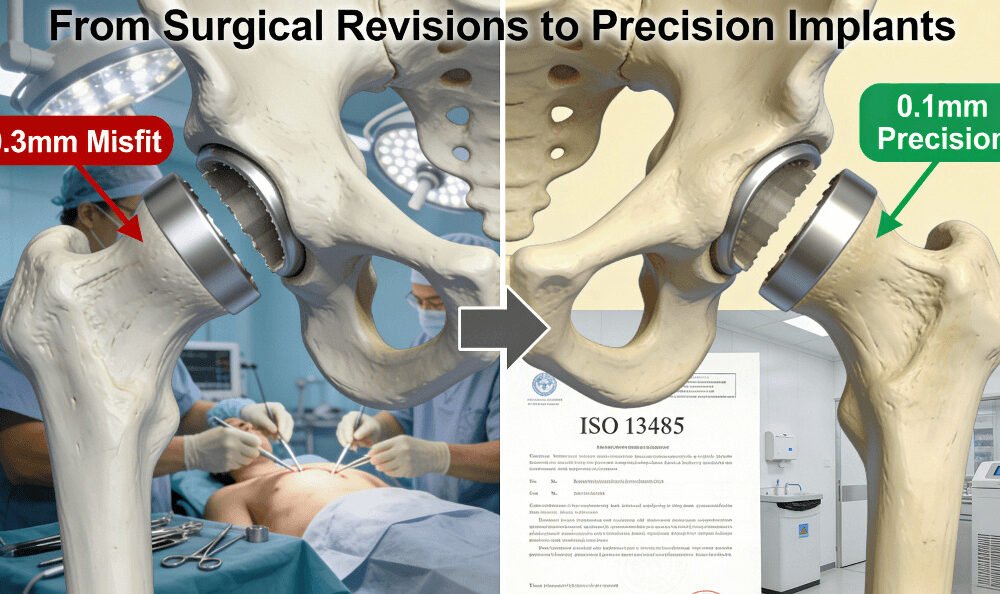
The medical device industry is facing an unprecedented and costly issue with custom implants that experience over 0.3mm misfit with the patient’s anatomy. This directly translates to surgical revisions and increases healthcare costs. The issue has been exacerbated by the inability of 3-axis CNC machining to consistently meet the needs of complex and patient-specific geometries. There is an unmet precision need. The issue stems from the absence of an overarching methodology that combines 5-axis technology with robust quality certifications, such as ISO 13485, and biocompatibility testing.
This article will show that an overarching methodology that combines 5-axis CNC machining addresses the fundamental issues of micron-level precision and surface finish, and durability of sterilization.
What Are the Critical Technical Hurdles in Medical Device Manufacturing That 5-Axis CNC Solves?
The medical device manufacturing industry is facing an unprecedented challenge that requires sub-micron precision and surface finish. The challenges with the current technology are fundamental and are addressed by 5-axis CNC machining.
1.The Limitations of Multi-Setup Machining on Geometric Accuracy
The 3-axis machining process involves multiple part repositions in order to achieve the machining of complex geometries. This results in positional inaccuracy, as each machining setup provides an independent datum point. This results in cumulative inaccuracy, which may even exceed the 0.3mm tolerance limit. This inconsistency in part geometry is the main reason for poor anatomical fit, thereby necessitating intraoperative corrections. The single setup advantage of 5-axis machining completely removes this inaccuracy by machining the entire part in relation to a single datum point.
2. Achieving Superior Surface Finishes for Biocompatibility
In 3-axis machining processes, achieving a surface finish with an average roughness Ra โค 0.4 ยตm is extremely challenging. This stems from the characteristics of linear machining processes โ inefficient tool movements may be required to form sharp features, necessitating secondary machining operations, which can lead to deviations in critical dimensional parameters. Through 5-axis medical device manufacturing, manufacturers can achieve direct machining of surfaces with Ra 0.4 ยตm because it maintains the optimal relative position between the tool and the workpiece surface, enabling smooth cutting movements. This advantage is particularly important when machining implant-grade surfaces, ensuring both surface finish and part accuracy..
3. Overcoming Tool Accessibility and Vibration in Complex Structures
Cavities and undercuts are common in lightweight and porous bone implants. These are difficult to machine using 3-axis machining. The designer has to compromise on the design. 5-axis machining overcomes this difficulty. The tool length and rigidity are improved by tilting the workpiece. This improves machining stability. The complex lattice structures are critical in bone implants. These are required for bone ingrowth. The machining stability is critical in machining these complex structures without tool deflection and breaking.
How Does ISO 13485 Certification Enhance Precision and Traceability in CNC Processes?
It is believed that precision machining depends only on the equipment. However, precision machining depends on an effective quality management system. ISO 13485:2016 is the standard that provides this foundation.

- Establishing a Framework for Process Validation and Control: While other quality systems are generic and applicable to many industries, ISO 13485</strong> is unique in that its requirements are specifically and exclusively relevant to the medical device sector. It calls for validation of every critical process that goes into the manufacturing of medical devices. This includes the validation of CNC machining parameters, tool life management strategies, and inspection methodologies. This means that the cutting speed and tool path that have been validated and shown to produce an Ra 0.4ยตm surface finish must be followed and adhered to.
- Ensuring Full Traceability for Risk Management and UDI Compliance: In case of an issue with the device after deployment in the market, traceability of the device back to its raw material origin, machining equipment, and machining personnel is critical. ISO 13485 calls for traceability that links every device back to its entire manufacturing history. This is critical and cannot be overemphasized. It is also highly relevant and compliant with the regulations that call for Unique Device Identification. This level of control and traceability is critical in ensuring that implants are manufactured with the specifications that are unique and relevant to individual patients.
- Integrating Real-Time SPC for Proactive Quality Assurance: A certified system features Statistical Process Control (SPC) integrated into production. Key dimensions and surface finishes are measured in real-time, with data analysis to recognize trends toward tolerance limits. This is a proactive quality assurance process that enables adjustments to be made before producing any defective parts. The process is a “prevent and assure” approach, as opposed to a “detect and scrap” approach. This is a foundational component in achieving a zero defect mindset, a necessity in medical device manufacturing.
What Strategies Ensure Sub-Micron Surface Finishes for Successful Osseointegration?
Osseointegration is the biological bonding between the implant and the bone tissue. This process is largely influenced by the surface properties of the implant. Sub-micron surface finish is a prerequisite, and this is accomplished with a multi-step machining process.
1. Optimized Dynamic Toolpaths and Tool Selection
The basis of an exceptional finish starts with the CAM programming stage of the machine. High-end 5-axis toolpaths use constant scallop height techniques, which provide smooth, non-stop motion in the direction of the cut, thus eliminating witness lines. In addition to this, the use of micro-grain carbide tools with certain coatings prevents the formation of built-up edge, thus allowing faster cutting speeds to achieve a predictable, uniform finish directly from the machine.
2. Multi-Axis Mechanical Polishing and Micro-Finishing Techniques
In cases where the finish needs to be mirror-like, a second machine, a CNC-controlled polishing machine, comes into play. In this machine, the implant is subjected to a fixed pressure through the use of non-contaminating, soft tools attached to the 5-axis machine, which polishes the implant in a predetermined path. This ensures that the surfaces of the implant, which may be curved, receive an even finish, unlike the manual method, which would require an individual to manually polish the implant, thus removing the microscopic peaks to bring the Ra down to the desired level for optimal cellular response.
3. Adherence to Geometric Dimensioning and Tolerancing Standards
Without control of form, control of surface finish is irrelevant. It is essential to refer to the ASME Y14.5 standard for geometric dimensioning and tolerancing (GD&T). The use of flatness, cylindricity, and surface profile as a parameter of size is essential in determining the acceptable variation in the final shape of the implant. Machining to these exacting standards ensures that the functional geometry of the implant matches its bio-functional surface.
How Can Manufacturers Achieve Anatomical Matching with 0.1mm Tolerance Using 5-Axis Technology?
The vision of personalized medicine is realized through an unbroken digital thread that converts medical imaging into a physically perfect implant. 5-axis CNC technology is the key enabler in this process.
1. From CT Scan to Machinable CAD Model
The process starts with the creation of a high-fidelity 3D CAD model based on the patient’s CT or MRI scan. The 3D model is used to create the patient-specific implant geometry, which must match perfectly with the anatomy. The 3D CAD model is then imported into a sophisticated CAM system to create the machining plans. The CAM software creates optimal multi-axis machining plans, taking into consideration the free-form surfaces of the anatomy.
2. In-Process Verification and Closed-Loop Feedback
In order to ensure the accuracy of the part being machined, the part may be fitted with an on-machine probing system, which will use the touch trigger probe to sense the critical datums and features of the part being machined, thus verifying the part being machined in real-time. If necessary, compensations may be made to the part to ensure that it meets the specifications before the machining of the part is complete, thus providing a powerful feature to ensure the 0.1mm tolerance requirement is met.
3. Final Validation by 3D Scanning and FEA Analysis
The finished product, after machining, is subjected to a complete 3D scan using a Coordinate Measuring Machine (CMM) or a laser scanning device.
What Process Controls Guarantee Long-Term Reliability of Surgical Tools Beyond 200 Sterilization Cycles?
It is a requirement that surgical instruments and reusable implant components maintain their performance and product integrity after being disinfected through multiple sterilization cycles. By utilizing the right materials and machining processes and performing long, term testing, the devices remain reliable over time.
1. Material Selection for Enhanced Durability and Biocompatibility
The choice of material is the main factor for a product to be dependable since it is one of the major aspects of product performance. It is a matter of selecting a specific material according to ASTM F136 Titanium or Cobalt Chrome alloys that have excellent strength, to, weight ratio, are corrosion, resistant, and biocompatible.
2. Precision Machining to Eliminate Micro-Crack Initiation Points
The reliability of the tool is greatly determined by the surface quality. Any microscopic imperfections or sharp corners that might have been created during the machining process can become crack initiation points</strong>. 5-axis machining allows for smooth cutting and control of corner radius, ensuring fatigue resistance. It is the precision of the machining process that allows the tools to extend far beyond the standard 200 cycle life.
3. Validated Sterilization Protocols and Accelerated Life Testing
Device manufacturers have to validate that the device will endure various sterilization procedures (autoclaving, gamma radiation, etc. ). Accelerated life testing reproduces normal wear for years, and the device is checked for functionality, precision, and integrity post the test. This is a significant aspect of the regulatory approval process for the Food and Drug Administration (FDA).
How Does a Sterile Clean Room Environment and Full Traceability System Help Mitigate Contamination Risks?
For makeup implant devices, contamination control is equally as important as dimensional accuracy. A contamination control strategy in depth is a mix of environmental and procedural controls.
- ISO Class 7 Clean Room Machining and Handling: Implant device components manufacturing and all handling operations are done in an ISO Class 7 Clean Room conducted under strict control. This makes certain that implant devices are free from contamination of microorganisms or particles. Workers follow gowning procedures rigorously, and every tool and equipment used for such operations is dedicated, cleaned, and sterilized.
- Comprehensive Particle and Bioburden Monitoring: The need for a proactive monitoring program is critical in this regard.
- Blockchain-Enabled Data Integrity for Ultimate Traceability: The utilization of traceability technology, which is at its most advanced with the utilization of blockchain technology, will be able to give an immutable record of the product’s history. All activities, from the origin of the materials utilized in the production process to the final stages of sterilization, will be recorded and included in an unforgeable record of the product’s history. The need to ensure environmental sustainability, as underscored in resources provided by the U.S. Environmental Protection Agency, is also critical in this regard.
Conclusion
It is not possible to be successful in the custom medical implant manufacturing business with high-tech equipment. What is required is a whole system that integrates the best precision 5-axis CNC technology, the highest level of ISO 13485 quality standards, and the most stringent level of protection against contamination. This will allow for the elimination of errors that result in surgical revisions. It will ensure that the first time is always the best time with perfect accuracy, improved patient safety, and effortless compliance. By adopting this philosophy, manufacturers will be able to meet the escalating requirements of personalized medicine with confidence. Those wishing to apply this philosophy in practice should first seek advice from a professional in precision 5-axis CNC machining services.
FAQs
Q1: What is the smallest feature size possible in 5, axis medical device manufacturing?
A. With 5, axis CNC machining, a feature size of 0.1mm can be achieved.
Q2: How does ISO 13485 affect the cost and timeline of custom implant production?
A: By obtaining ISO 13485 certification, the company can lower its costs in the long run since the need for rework is lessened through process validation that is inherent in the certified processes. Also, it can help in reducing the time of the custom implant getting to the market as demonstrated in different case studies on the ISO 13485 standard.
Q3:What materials are most compatible with implants for 5, axis machining?
A:To manufacture implants by 5, axis machining, Ti, 6Al, 4V alloy, PEEK, and Cobalt, Chrome should be selected, as they are easy to machine and biocompatible with the human body.
Q4:How can the accuracy of patient, specific implants be confirmed?
A: On, machine probing and 3D scanningย after the manufacturing process using CMMs facilitate the verification of the accuracy of the implants.ย
H3: Author Bio
The author is a precision manufacturing technology expert based at LS Manufacturing. The company team works hand, in, hand with medical device engineers and researchers to figure out solutions for complicated components in the areas of orthopedics, surgical robotics. diagnostic equipment. After obtaining the required certifications, their team applies cutting, edge technologies to produce high, quality, compliant solutions.Should you want more. details reach out to them today for a totally free, no, obligation project assessment and Design for Manufacturability (DFM) analysis. Allow them to assist you with transforming your ideas into clinically successful realities.
Tech
How Creators Are Actually Making Money With AI Video in 2026
AI video is no longer just a fun tool for making clips. In 2026, it has become part of how creators build real income. What changed is not just video quality. What changed is the economics.
AI video lowers production cost. It cuts turnaround time. It makes content testing cheaper. That means creators can publish more, try more formats, and find what works faster.
That does not mean AI video prints money by itself. It does not. A weak idea is still weak. A bad offer still will not convert. And low-trust content still performs badly.
But if a creator already understands audience, messaging, and distribution, AI video can make the entire system more efficient.
That is where the money comes from.
In this article, I want to break down how creators are making money with AI video in 2026, which monetization models are working, and why workflow matters more than most people think.
Why AI video matters for creator monetization in 2026
The biggest reason AI video matters is simple: it changes the cost of making content.
A few years ago, if I wanted to test five video ideas, I usually had to pick one and hope it worked. The other four ideas stayed in my notes because filming, editing, and revising took too much time.
Now I can test more angles with less effort, and that changes creator monetization in three important ways.
Lower production cost means higher margin
If content costs less to make, more revenue stays with the creator.
This matters whether the creator makes money from ads, affiliate links, sponsorships, or digital products. Lower production cost improves the margin on every monetization model.
Faster output means more chances to find winners
Most creator income does not come from random luck. It comes from repeated testing.
You test a different hook, a different product angle, a different storytelling format, or even a different call to action.
AI video makes that testing cycle much faster.
More variations improve monetization odds
A creator who publishes one polished video might still lose to a creator who publishes five strong variations and learns faster.
That is why AI video matters. It does not replace skill. It increases speed and volume around a monetization strategy.
The five main ways creators are making money with AI video
There are many ways to monetize content, but most AI video income today falls into five groups:
- Ad revenue
- Affiliate marketing
- Sponsorships and brand deals
- Digital products
- Client work and services
Each one benefits from AI video in a different way.
1. Ad revenue from YouTube and short-form platforms
This is still the most familiar model.
Creators publish videos, grow an audience, and monetize views through platform payouts. AI video helps here because it makes consistent publishing easier.
That matters because ad revenue depends on scale. One video rarely changes everything. What matters is upload frequency, retention, topic fit, audience growth over time.
Why AI video helps ad revenue
It helps creators publish more often, with more visual variety, and with lower production friction.
That is useful for:
- faceless YouTube channels
- educational content
- niche explainers
- short-form storytelling
- list-based content
AI video does not automatically improve watch time. But it lets creators test more formats that might improve watch time.
The real advantage is consistency.
A creator who can produce three solid videos a week instead of one weakly edited video every two weeks has a much better chance of building monetizable traffic.
2. Affiliate marketing with AI video
This is one of the strongest monetization models right now.
Affiliate marketing works especially well with AI video because video is good at showing products, comparing options, and guiding people toward a click.
I think this is where a lot of creators underestimate AI. They focus on โviral clipsโ when the better use case is often commercial content.
Why affiliate works so well with AI video
Affiliate content usually needs:
- fast product demos
- clear explanations
- strong visuals
- frequent creative refreshes
AI video lowers the cost of producing all of that.
A creator can make product roundups, comparison videos, short-form reviews, how-to clips and top tools lists, all without setting up a full production workflow every time.
Where the money comes from
The affiliate model works when video content does one of these things:
- solves a problem
- shows a product in action
- compares alternatives
- gives a clear recommendation
That is why AI video affiliate content often works best in niches like:
- software
- creator tools
- productivity
- e-commerce tools
- online business
- education
Why more variations improve affiliate revenue
Affiliate income improves when creators test:
- different openings
- different recommendation angles
- different product positioning
- different visual styles
A static blog post gives one chance. AI video gives many.
That makes affiliate marketing one of the most practical AI video monetization models in 2026.
3. Sponsorships and branded content
Brands do not just want to reach anymore. They want output.
They want creators who can:
- move fast
- test concepts
- adapt messaging
- deliver multiple variations
That is why AI video is becoming useful for sponsorships.
How creators use AI video for brand work
Creators use AI video to:
- mock up campaign ideas before pitching
- create sponsor-friendly visual concepts
- produce UGC-style content faster
- localize branded content
- turn one campaign idea into multiple deliverables
That gives creators a strong advantage, especially if they work with smaller brands that do not have large internal production teams.
Why brands still care about trust
This part matters. AI video helps with speed, but sponsorship revenue still depends on trust. If the content feels generic, lazy, or off-brand, it will not perform.
So the winning approach is not โreplace yourself with AI.โ
The winning approach is โuse AI to produce better sponsor content with less friction.โ
That means clear messaging, audience fit, strong review process, brand-safe output.
The creator still matters. AI just makes the production side lighter.
4. Digital products and courses
This is the highest-margin model for many creators.
Instead of depending only on ads or brand deals, creators use content to sell courses, guides, templates, prompt packs, playbooks, and memberships.
AI video supports this model in two ways.
First, it helps sell the product
Creators can use AI video for:
- sales page explainers
- launch videos
- social promo clips
- course previews
- feature walkthroughs
That shortens the time between building a product and marketing it.
Second, it helps package the knowledge
A creator who teaches something can use AI video to turn:
- slides into explainers
- written lessons into visual summaries
- course updates into short announcements
That makes educational content easier to maintain.
Why digital products fit AI video well
This model works because the margin is high.
If AI helps reduce content production cost while the product price stays the same, profit increases.
That is one reason I see more creators moving toward AI-assisted product funnels rather than relying only on ad revenue.
5. Client work and creator services
Not every creator wants to become a media brand. Some want to monetize their skill directly.
AI video generators make that easier too.
A creator can offer short-form content packages, ad creatives, founder video systems, product demo videos, landing page explainer content, to startups, small businesses, and online brands.
Why this works
Most clients do not care whether a creator used a camera or AI. They care about speed, quality, clarity, and conversion potential.
If a creator can produce useful assets fast, that is valuable.
This model is often overlooked, but it can be one of the fastest ways to monetize AI video, especially for creators who already understand messaging and marketing.
Why affiliate marketing is one of the strongest AI video models
If I had to pick one model that fits AI video especially well, it would be affiliate.
That is because affiliate content benefits from three things AI video improves:
1. Speed of production
Affiliate opportunities move fast. New tools launch, features change, and creators need content quickly.
2. Volume of testing
Different product angles convert differently. AI video makes it easier to test:
- demo-first videos
- listicle videos
- review-style clips
- comparison videos
3. Lower cost per asset
A creator can make more monetizable content without spending thousands on production.
This is also where workflow platforms matter. If the creator is stacking too many disconnected tools, the speed advantage disappears.

That is one reason creators increasingly use platforms like Loova for AI video workflows. When generation, editing, and iteration happen in one place, affiliate content gets easier to produce at scale.
How AI video improves YouTube and platform ad revenue
A lot of people assume more videos automatically means more money. That is not true.
The platform still rewards retention, clarity, topic alignment, and consistency. AI helps with the consistency part. It can also help with format testing.
For example, a creator can test:
- story-first intros
- faster visual pacing
- different background styles
- different narrative structures
That helps improve watch behavior over time.
Retention still matters more than volume
I want to be clear here.
Publishing ten weak videos will not outperform publishing fewer strong ones forever. AI video helps when it improves the output system, not when it floods platforms with low-value content.
That is why the best creators use AI to improve efficiency, increase testing, and support storytelling, instead of dumping meaningless content.
The AI video workflow behind successful monetization
This is the part many articles miss. Monetization does not depend only on content. It depends on workflow.
A creator who monetizes well usually has a repeatable system:
- Find a topic or offer
- Turn it into one or more repeatable video formats
- Publish consistently
- Track clicks, views, or conversions
- Improve what works
AI video helps when it fits into that system.
Formats matter more than random inspiration
The strongest creators are not asking, โWhat should I make today?โ
They are asking:
- which format performs best
- which topic converts
- which creative angle deserves another variation
That is why repeatable content structures matter so much.
All-in-one platforms reduce workflow drag
Disconnected tools slow everything down.
One tool for image generation. Another for video. Another for editing. Another for voice. Another for export.
That stack becomes expensive and mentally heavy.
A unified platform reduces that drag. That is where Loova fits well for many creators. It helps keep content production, generation, and iteration inside one workflow instead of across five separate dashboards.
That matters more than most people realize.
What types of creators benefit most
Not every creator benefits in the same way. But some groups clearly gain more from AI video monetization.
YouTubers and storytellers
They benefit from faster visual production and more content experiments.
Short-form creators
They benefit from speed, variation, and trend adaptation.
Affiliate marketers
They benefit from more demos, comparisons, and creative refreshes.
Educators and solo founders
They benefit from explainers, course promos, and clear product content.
Small media teams
They benefit because AI lowers production cost without requiring a bigger headcount.
Common mistakes creators make when trying to monetize AI video
There are a few traps I see often.
Publishing low-value content at high volume
Volume is useful only when the content is still helpful or compelling.
Using AI visuals without a monetization path
A cool video is not a business model. The creator still needs a funnel, an offer, a trusted recommendation, and a clear CTA.
Ignoring audience trust
AI can help produce content faster, but it cannot fake trust. If the creator pushes irrelevant offers or low-quality products, monetization drops.
Using too many disconnected tools
This is a big one. Complex stacks reduce speed and increase burnout.
Chasing virality instead of building systems
One viral clip is exciting. A repeatable monetization format is worth much more.
How I would start monetizing AI video in a practical way
If someone asked me where to start, I would keep it simple.
Step 1: Pick one monetization model
Do not try to do ads, affiliate, brand deals, and product sales all at once. Choose one.
Step 2: Pick one repeatable content format
For example:
- tool comparisons
- product demo shorts
- story-based explainers
- niche educational clips
Step 3: Build a small prompt and content library
Save:
- successful prompts
- winning hooks
- proven structure
- best-performing CTA formats
Step 4: Track the right metrics
If the model is affiliate, track:
- clicks
- CTR
- conversion rate
If the model is ad revenue, track:
- retention
- watch time
- RPM trends
Step 5: Improve the system before scaling
The goal is not maximum output on day one. The goal is a repeatable workflow that improves over time.
The future of creator monetization with AI video
AI lowers the barrier to entry. That is good and bad.
It means more creators can produce useful content faster. It also means competition increases. That is why the future advantage will not come from access to AI alone.
It will come from better strategy, stronger trust, clearer offers, faster workflows, and better format testing.
In other words, AI makes execution easier, but it also makes lazy content easier. The winners will be the creators who use AI inside strong systems.
Final thoughts
Creators are making money with AI video in 2026, but not because AI is magic.
They are making money because AI changes the economics of content: lower production cost, faster publishing, more testing, and better workflow efficiency. That helps creators monetize through ads, affiliate marketing, sponsorships, digital products, and client services.
If I had to sum it up simply, I would say this:
AI video does not create income by itself. It creates leverage.
And creators who build repeatable systems around that leverage are the ones making real money.
If I were starting today, I would not chase every trend. I would choose one monetization path, one repeatable format, and one workflow platform that keeps production simple. For a lot of creators, that means using a unified system like Loova to reduce friction and produce more monetizable content without building a messy tool stack.
That is where the real advantage starts.
Frequently Asked Questions
Can creators really make money with AI video?
Yes. Creators are already using AI video to support ad revenue, affiliate marketing, sponsorships, digital products, and client work. The income comes from the business model, not the AI alone.
What is the best way to monetize AI-generated videos?
It depends on the creator, but affiliate marketing, ad revenue, and digital products are some of the strongest models because they benefit directly from faster content production.
Is affiliate marketing good for AI video creators?
Yes. It is one of the best fits because AI video helps creators produce more demos, comparisons, and product-focused content quickly.
Can AI videos get monetized on YouTube?
Yes, if they follow platform rules and provide real value. Monetization still depends on audience retention, originality, and policy compliance.
What are the best AI video tools for creators in 2026?
The best tools depend on workflow needs, but creators increasingly prefer platforms that combine video generation, editing, and creative variation in one place.
How do beginners start making money with AI video?
The easiest path is to pick one format and one monetization model first. For many beginners, that means short product videos for affiliate content or simple educational videos tied to digital products.
Do brands pay for AI-generated content?
Yes, but they still care about quality, fit, and trust. AI helps speed up production, but the creator still needs to deliver strong brand-aligned content.
Is AI video a real side hustle or just hype?
It can be a real side hustle if the creator uses it to support a clear monetization model. Without strategy, it stays hype. With a system, it can become a useful income tool.
Tech
Thetvapp Explained: Features, Safety, Streaming Guide
In todayโs digital era, online streaming platforms have transformed how people consume entertainment, sports, and live television. From movies to real-time broadcasts, audiences now expect instant access without traditional cable limitations. This shift has given rise to numerous web-based services that promise convenience, variety, and flexibility. Among these platforms, one name that frequently appears in online discussions is thetvapp. Its growing popularity has sparked curiosity among users who want to understand what it offers and how it fits into the modern streaming ecosystem.
The appeal of such platforms lies in their ability to deliver content across devices without geographical restrictions. However, with convenience also comes questions about reliability, legality, and user safety. Many users explore these services without fully understanding how they operate or what risks may be involved. This article takes a deep dive into the streaming landscape, breaking down features, usability, safety concerns, and alternatives while providing a clear picture of how platforms like this function in todayโs media-driven world.
What is thetvapp and Why It Gained Attention
The rise of thetvapp reflects a broader trend in digital entertainment where users seek instant access to live channels and on-demand content. It became widely discussed due to its simple interface and promise of streaming various channels without traditional cable subscriptions. Many users are drawn to platforms like this because they offer a centralized hub for entertainment, especially for live sports and TV programming.
One of the key reasons it gained attention is the increasing demand for cost-effective streaming solutions. As cable prices continue to rise, audiences look for alternatives that provide similar or even broader access at minimal cost. This shift in consumer behavior has allowed such platforms to gain traction quickly, especially among younger audiences who prefer mobile and web-based viewing experiences over conventional television setups.
At the same time, the popularity of such services also comes from word-of-mouth discussions on online forums and social media. Users often share their experiences, highlighting both the convenience and limitations of these platforms. This organic visibility has contributed significantly to the rising curiosity surrounding streaming services like thetvapp.
Core Features and User Experience of Modern Streaming Platforms
Modern streaming platforms are built with a focus on accessibility, speed, and variety. Users expect smooth playback, minimal buffering, and a wide range of channels or content categories. These features have become essential benchmarks in evaluating any digital streaming service today.
One of the standout elements of such platforms is their ability to consolidate multiple types of content into a single interface. Instead of switching between apps or subscriptions, users can often find everything in one place. This convenience is a major factor driving the popularity of online streaming solutions, especially among users who value simplicity.
Another important aspect is the adaptability of these platforms across devices. Whether accessed through smartphones, tablets, or desktop browsers, the experience is generally designed to be consistent. This cross-device compatibility ensures users can continue watching content seamlessly regardless of location or hardware.
Content Categories and Live Sports Access Overview
Streaming platforms typically organize content into categories such as entertainment, news, documentaries, and sports. Among these, live sports often attract the highest engagement due to their real-time nature and global fan base. Viewers prefer platforms that allow them to watch matches without delays or regional restrictions.
Sports streaming in particular has become a defining feature of modern digital platforms. Football, basketball, cricket, and other major sporting events are frequently in demand, especially during tournaments and leagues. This has encouraged platforms to prioritize stable live streaming capabilities to meet user expectations.
Beyond sports, users also look for access to general entertainment channels and international broadcasts. This diversity helps platforms appeal to a wider audience, making them more versatile and attractive compared to single-purpose services. The combination of live events and on-demand content creates a balanced viewing experience for users.
Device Compatibility and Accessibility Factors
One of the strongest advantages of modern streaming platforms is their compatibility with multiple devices. Users today expect seamless access whether they are using a smartphone on the go or a smart TV at home. This flexibility has become a core requirement in the streaming industry.
Mobile accessibility is particularly important, as a large percentage of users now consume content through handheld devices. Optimized mobile interfaces ensure smooth navigation, faster loading times, and better control over playback features. This makes it easier for users to enjoy content without needing advanced technical setups.
Additionally, browser-based accessibility ensures that users do not need to install heavy applications or software. This lightweight approach makes streaming more convenient and reduces barriers to entry, especially for users who prefer quick and direct access to content.
thetvapp Interface, Navigation, and Usability
The design and usability of a streaming platform play a crucial role in user satisfaction. A clean interface, well-organized categories, and responsive controls contribute significantly to the overall experience. Platforms that prioritize simplicity tend to attract more users because they reduce confusion and improve content discovery.
Navigation is typically structured to allow users to find channels or streams quickly. Categories are often divided based on content type, making it easier to switch between live events, entertainment, or other programming. A well-designed interface reduces friction and enhances viewing efficiency.
When discussing thetvapp, usability becomes a central point of interest. Users often evaluate how easily they can access streams, switch channels, and manage playback without interruptions. A smooth experience is essential for retaining users in a highly competitive streaming environment where alternatives are readily available.
Safety, Legality, and Online Streaming Risks
One of the most important considerations in the streaming world is safety and legality. Not all platforms operate under official broadcasting rights, which can raise concerns about copyright compliance and user protection. Understanding these aspects is essential before engaging with any online streaming service.
Users should be aware that unofficial streaming platforms may expose them to risks such as intrusive ads, data tracking, or unstable streams. These issues can affect both device security and viewing experience. It is always recommended to prioritize platforms that follow legal distribution agreements and maintain transparent policies.
In addition to legal concerns, cybersecurity is another critical factor. Some streaming websites may lack proper encryption or security protocols, making users vulnerable to malware or phishing attempts. Staying informed and cautious helps reduce these risks significantly while browsing online content.
Alternatives to Streaming Platforms in the Market
The streaming industry offers a wide range of alternatives, from subscription-based services to free ad-supported platforms. Popular services like Netflix, Hulu, Amazon Prime Video, and Disney+ provide licensed content with high-quality streaming and strong security measures.
Live TV alternatives such as YouTube TV, Sling TV, and Hulu + Live TV also offer legal access to sports and entertainment channels. These platforms are designed to replicate traditional television experiences while adding the flexibility of online access.
For users seeking free options, there are ad-supported platforms that provide limited but legal content libraries. These alternatives ensure safer viewing experiences while still offering a variety of entertainment choices across genres and categories.
Conclusion
The evolution of digital entertainment continues to reshape how audiences consume media, and platforms like thetvapp highlight the growing demand for flexible streaming solutions. As users shift away from traditional cable systems, online platforms are becoming the primary source of live and on-demand content. This transformation reflects broader changes in technology, accessibility, and viewer expectations.
At the same time, the future of streaming will likely be shaped by stricter regulations, improved security measures, and enhanced user experiences. While convenience remains a key factor, users are increasingly aware of safety, legality, and quality considerations. The balance between accessibility and compliance will define the next phase of digital streaming evolution.
Ultimately, the success of any platform depends on its ability to deliver reliable, safe, and high-quality content. Whether users explore mainstream services or niche platforms like thetvapp, informed decision-making remains essential. As the industry continues to grow, viewers will benefit from more choices, better technology, and improved streaming experiences across the digital landscape.
Read More: Dollartimes.co.uk
Tech
White Roof Benefits, Design & Energy Savings Guide
A white roof is becoming one of the simplest and most effective ways to reduce heat in homes and buildings. It reflects sunlight instead of absorbing it, which helps keep indoor spaces cooler even during very hot days. This simple idea is now used in homes, offices, and large buildings around the world. Many people are choosing it because it helps save energy and lowers electricity bills. It also supports a cleaner environment by reducing overall heat buildup in cities. In this article, you will understand how it works, why it matters, and how it can benefit both small homes and large structures.
The Science Behind Cool Roofing Systems
A white roof works on a simple scientific idea called reflection. Instead of absorbing sunlight like dark roofs, it sends most of the heat back into the atmosphere. This reduces how much heat enters the building underneath. Because of this, indoor temperatures stay lower without depending too much on fans or air conditioners.
The surface of a white roof usually has high solar reflectance. This means it reflects a large part of sunlight instead of storing it. Traditional roofs absorb heat and slowly release it inside the house, making rooms hotter even after sunset. But a white roof reduces this heat transfer significantly.
Another important factor is thermal emittance. This refers to how quickly a surface releases absorbed heat. A good white roof releases heat faster, keeping the building cooler for longer periods. This simple combination of reflection and heat release makes it very effective in hot climates.
Cities benefit too because when many buildings use a white roof, the overall temperature of the area drops slightly. This helps reduce the โurban heat islandโ effect, where cities become much hotter than surrounding rural areas.
Will You Check This Article: What Does Deposited Plan Mean in Property Explained Guide
Energy Efficiency and Cooling Benefits of white roof
One of the biggest advantages of a white roof is energy savings. When a roof reflects sunlight, the inside of the building stays naturally cooler. This reduces the need for air conditioners and cooling systems, which often consume a lot of electricity.
In hot weather, traditional roofs can reach extremely high temperatures. This heat slowly moves inside, making rooms uncomfortable. A white roof blocks much of this heat from entering in the first place. As a result, cooling systems do not need to work as hard, which lowers electricity bills.
Homes with a white roof often feel more comfortable during peak summer hours. Even in areas with long heatwaves, indoor temperatures remain more stable. This makes daily life easier, especially in regions where electricity costs are high or power cuts are common.
Another benefit is reduced strain on cooling equipment. Air conditioners last longer when they are not overworked. This means fewer repairs and lower maintenance costs over time. Many homeowners choose a white roof for this long-term saving potential.
In commercial buildings, the impact is even bigger. Offices, warehouses, and malls use large cooling systems. A white roof can significantly reduce operating costs in these spaces.
Materials Used for Reflective Roofing Solutions
A white roof can be created using different materials depending on budget and building type. One common option is reflective paint. This special coating is applied directly to the roof surface and gives it a bright, reflective finish. It is one of the easiest and most affordable methods.
Another option is single-ply roofing membranes. These are factory-made sheets that are installed on top of the roof. They often come in white or light colors and provide strong heat reflection along with waterproof protection.
Tiles and shingles are also available in light shades that function as a white roof system. These materials are more durable and are often used in residential construction. They provide both style and heat protection.
Metal roofs can also be coated with reflective layers to create a white roof effect. These coatings improve heat reflection and extend the lifespan of the roof surface.
Each material has its own benefits. Reflective paint is budget-friendly, while membranes and tiles offer more durability. The choice depends on climate, budget, and building design.
Cost Factors and Long-Term Savings
The initial cost of installing a white roof depends on the material used and the size of the building. Reflective paint is usually the cheapest option, while membrane systems and specialized roofing materials can cost more at the start.
However, the long-term savings are often much higher than the initial investment. A white roof reduces electricity usage, especially during hot months. Over time, this leads to noticeable savings on energy bills.
Another cost advantage comes from reduced maintenance. Since the roof stays cooler, it experiences less thermal stress. This means fewer cracks, less damage, and a longer lifespan.
In many cases, homeowners recover their investment within a few years through energy savings alone. For large buildings, the return on investment can be even faster because of high cooling costs.
Some regions also offer incentives or rebates for energy-efficient roofing systems. This can further reduce the installation cost of a white roof.
Climate Impact and Environmental Advantages
A white roof is not just good for individual homes. It also plays an important role in protecting the environment. One of its biggest contributions is reducing greenhouse gas emissions.
When buildings use less electricity for cooling, power plants generate less energy. This leads to lower fuel consumption and fewer emissions released into the air. Over time, this helps reduce air pollution.
Another major benefit is lowering the urban heat island effect. Cities with many dark roofs trap more heat, making them warmer than surrounding areas. A white roof reflects sunlight and helps balance temperatures across urban spaces.
This cooling effect also improves air quality. Lower temperatures slow down the formation of ground-level ozone, which is a harmful pollutant. As a result, people experience cleaner and healthier air.
A white roof also helps reduce strain on power grids during hot weather. When demand for electricity drops, the risk of power shortages decreases.
Overall, this simple roofing solution supports a more sustainable and climate-friendly environment.
Maintenance Tips for Roof Longevity
A white roof is generally low maintenance, but regular care helps it last longer and perform better. One important step is cleaning the surface occasionally. Dust, dirt, and leaves can reduce its reflective ability over time.
It is also important to check for cracks or damage. Small issues should be repaired quickly to prevent leaks or further deterioration. Regular inspections help maintain the roofโs performance.
In areas with heavy rain or dust storms, more frequent cleaning may be needed. This keeps the reflective surface bright and effective.
Reapplying reflective coating after a few years can also help maintain efficiency. Over time, exposure to sun and weather can reduce brightness, so a fresh layer restores performance.
Proper drainage is another important factor. Standing water can damage any roof surface, so ensuring smooth water flow helps extend its life.
With simple care, a white roof can stay effective for many years.
Design Considerations and Aesthetic Choices of white roof
A white roof is not just about function. It can also be part of modern building design. Many architects use it to create clean, bright, and minimalist looks.
In residential homes, a white roof can make the building appear more modern and stylish. It also pairs well with different wall colors and exterior designs.
Some people worry that a white roof might look too plain. However, modern materials come in different textures and finishes that improve visual appeal while keeping heat-reflective properties.
In commercial buildings, a white roof often gives a professional and clean appearance. It also signals that the building is energy efficient, which can be attractive for businesses focused on sustainability.
Another design advantage is flexibility. A white roof can be used on flat roofs, sloped roofs, and even complex architectural shapes. This makes it suitable for many building types.
Overall, it combines both style and function in a simple way.
Conclusion
A white roof is one of the most practical and effective solutions for reducing heat, saving energy, and improving comfort in buildings. It works by reflecting sunlight, lowering indoor temperatures, and reducing the need for heavy cooling systems. This leads to lower electricity bills and better energy efficiency. Over time, it also helps extend roof life and reduce maintenance costs.
Beyond personal benefits, a white roof also supports environmental health by reducing urban heat and lowering carbon emissions. It is a simple change that can make a big difference in both homes and cities. As more people become aware of energy-saving solutions, this roofing option continues to grow in popularity.
Read More: Dollartimes.co.uk
-
Digital Marketing1 month agoSimpcitt: Exploring the Rise of Digital Fan Culture
-
Digital Marketing1 month agoAdsy.pw/hb3: Understanding Short URL Trends & Online Safety
-
Health1 month agoXT Labs Steroids: Reviews, Quality & Where to Buy
-
Tech1 month agoTrucofax: The Digital Hub Reinventing Smart Information Access
-
Tech1 month agoStormuring: Understanding the Rising Trend and Its Impact
-
Food & Drinks1 month agoMannacote: Understanding the Digital Term Shaping Modern Trends
-
Entertainment1 month agokracensoft.com: A Practical Look at a Growing Digital Platform
-
Entertainment1 month agoGarforfans: A Complete Guide to the Rising Digital Trend
