Tech
Browse Safer on Windows: Practical Privacy Gains with iTop VPN
Most browsing risks don’t feel dramatic in the moment. You open a link, log in to an account, join a public Wi‑Fi, or search for something personal. That normal activity creates a trail: your IP address, your DNS requests, and a lot of metadata that can be collected, blocked, or abused.
A VPN is one of the simplest tools for tightening up everyday privacy. iTop VPN for Windows focuses on encrypted traffic, IP masking, and a set of add-ons that reduce tracking and exposure during routine browsing.
What is iTop VPN?
iTop VPN for Windows is a VPN app that routes your internet traffic through VPN servers while applying AES-256 encryption and a no‑log policy.
The Windows version is presented as a free VPN option that can connect to free servers without login, with support for Windows 11/10/8/7 plus Windows on ARM.
It also highlights a large server pool, 3200+ servers across 100+ locations, so you can switch regions quickly when a site or network blocks access.
Benefits for safer, more private browsing
Less exposure of your real IP address
Recall how many sites use IP-based tracking, rate limits, and geo rules. iTop VPN assigns a new IP address after you connect to a server, which helps hide your original public IP during browsing sessions.
If you prefer a consistent identity for certain activities, iTop VPN also offers dedicated IP options in the US, UK, Canada, and Germany so you can connect with the same exclusive IP each time.
Encrypted traffic on public Wi‑Fi
Public Wifi is convenient and also a common place for snooping and interception. iTop VPN states it safeguards your data with encryption to help prevent interception by ISPs, government monitoring, and third-party advertisers, which is useful when browsing on shared networks.
Fewer tracking surfaces while you browse
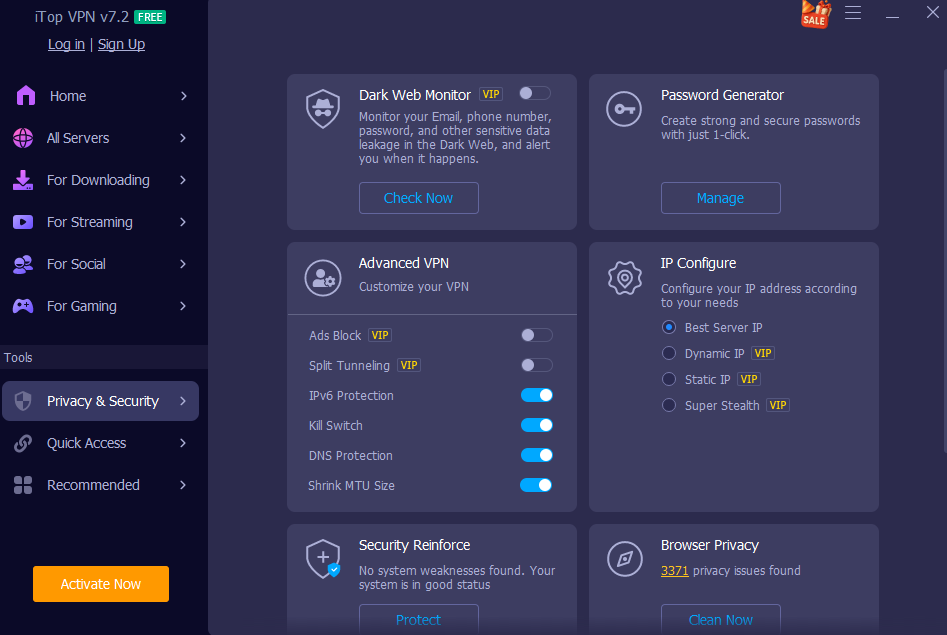
Two features work well together for day-to-day browsing hygiene:
- Browser Anti‑Tracking: iTop VPN can automatically clean browser traces and supports major browsers such as Chrome, Firefox, Edge, Safari, IE, and Waterfox.
- Ads Block: it includes an ad-blocking option aimed at blocking malicious ads and cutting pop-ups.
This combination is useful when browsing content-heavy sites that are packed with trackers, aggressive ads, and risky redirects.
Reduced leak risk during connection drops
A VPN is only helpful while it’s connected. If the tunnel drops for a moment, traffic can jump back to the regular connection. iTop VPN includes a Kill Switch that automatically stops all internet traffic if the VPN connection switches off, then resumes when the VPN reconnects.
That feature is a practical guardrail for people who browse on unstable Wi‑Fi or move between networks during the day.
Better protection from DNS and WebRTC leaks
Even with a VPN, browser-level leaks can expose identifying details.
- DNS Leak Protection: iTop VPN states it prevents system DNS settings from being modified and reduces hijacking or spam risks.
- WebRTC Leak Protection: it targets a known browser vulnerability (called out for Firefox and Chrome) that may leak public and private IP addresses.
For privacy-minded users, these are useful because they focus on leak paths that many people never check.
Broader protocol options for restrictive networks
Some schools, offices, and networks block common VPN traffic. iTop VPN includes three VPN protocols, TCP, UDP, and HTTPS, so you can pick a mode that works better for the network you’re on.
HTTPS mode can also be helpful on networks that inspect traffic closely, since it resembles regular secure web traffic.
Split tunneling to keep local services smooth
Split tunneling routes some app traffic through the VPN while other apps use the local connection.
That can be handy if you want private browsing in a browser while keeping another app (like a local work tool) on the normal route.
Privacy posture backed by a No‑Log Policy
iTop VPN states it sticks to a No‑Log Policy and will not track or record profile information.
For users who are serious about privacy, that statement matters because logs can turn a VPN into another data collector.
Extra account safety features
Browsing privacy is tied to account security, since most browsing ends in logins.
iTop VPN includes Dark Web Monitor, which scans dark web sites for leaked information and alerts you if your email, phone, or other information is detected.
It also includes a Password Generator that creates strong passwords with uppercase, lowercase, digits, and symbols, and it can store password history with remarks.
IPv6 support on compatible servers
The Windows page mentions IPv6 servers and states that giving IPv6 higher priority allows Windows devices to connect to servers with IPv6 protocol while maintaining online security.
If you browse on networks that use IPv6 heavily, this option can help keep your VPN setup aligned with that environment.
Fast browsing without bandwidth caps
If a VPN slows browsing too much, people stop using it. iTop VPN states it does not limit bandwidth speed and works to mitigate the influence of ISP throttling.
The product page also highlights unlimited data and bandwidth, with a focus on fast connection for streaming and gaming as well as browsing.
How to use iTop VPN for safer browsing (Windows)
1. Download and install Go to the iTop official page and click the Free Download button:
2. Connect to a VPN server
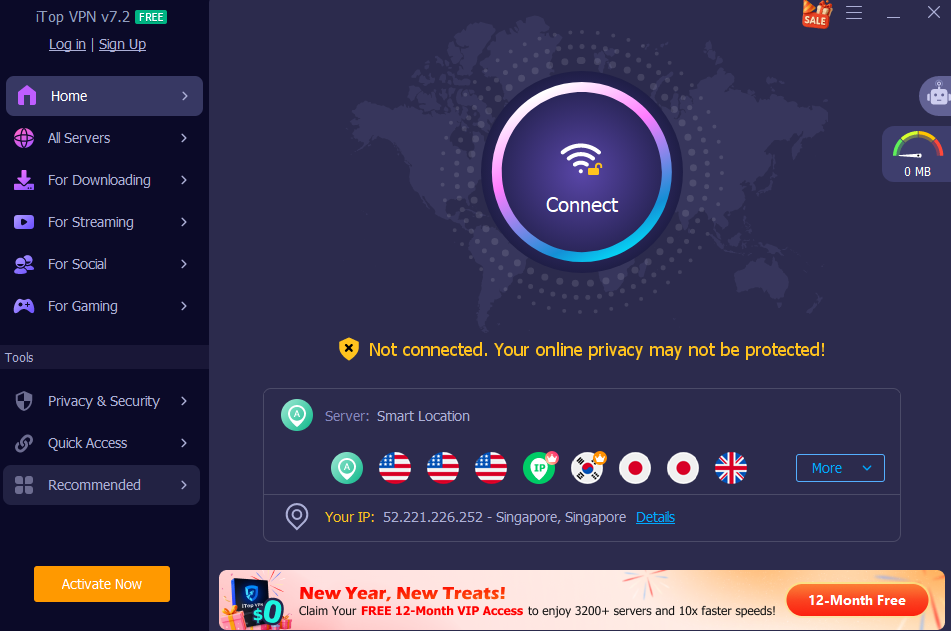
The setup steps on the page describe installing, launching, then connecting to a free VPN server without login.
3. Turn on privacy options that match your habits
For everyday browsing, consider enabling Kill Switch, Ads Block, DNS leak protection, WebRTC leak protection, and browser trace cleanup.
4. Pick an IP style that fits the session
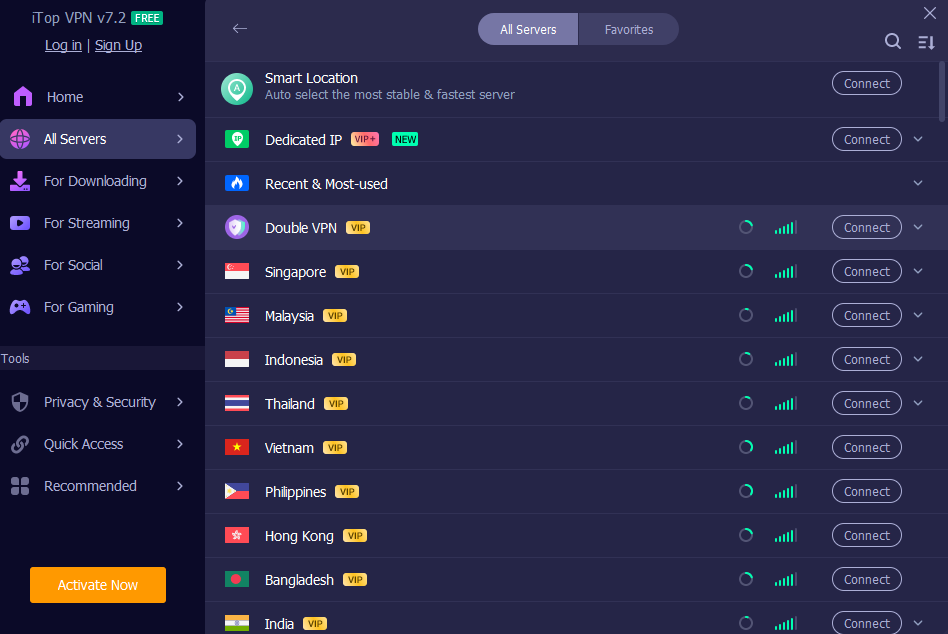
Use the best server IP (fastest/closest) for regular browsing, a dedicated IP for consistency, or the smart location option for lower traceability.
5. Set it to start with Windows
The Windows page notes a launch-on-startup option, so traffic is encrypted from the beginning of a session.
Conclusion
Safe browsing is mostly about habits: encrypt your traffic, reduce leaks, cut trackers, and keep credentials strong. iTop VPN for Windows bundles those ideas into one app, encryption, server coverage, leak protection, Kill Switch, anti-tracking cleanup, ad blocking, dark web monitoring, and password generation.
Tech
Cost Air Conditioner Coil Replacement Guide & Pricing 2026
When your cooling system starts losing power or stops cooling properly, the problem is often deeper than just a simple fix. One of the most common issues is coil damage, which can seriously affect performance and comfort. Understanding the cost air conditioner coil replacement helps you plan better and avoid surprise expenses. Many homeowners ignore early warning signs and end up paying more later. In this guide, we will break everything down in a very simple way so you know what affects the price, when replacement is needed, and how to make smarter decisions.
What Air Conditioner Coils Actually Do
Air conditioner coils are one of the most important parts of your cooling system. They help move heat out of your home so cool air can circulate properly. There are usually two main coils, the evaporator coil inside and the condenser coil outside. Both work together to keep your home comfortable during hot weather.
When the system is running, the refrigerant flows through these coils and absorbs heat from inside your home. That heat is then released outside. If either coil is damaged or dirty, the whole cooling process slows down. This leads to weak airflow, warm air, and higher electricity bills.
Coils are made of metal tubing and are very sensitive to dirt, corrosion, and moisture. Over time, they can wear out, especially if maintenance is ignored. Once damage becomes serious, repair is often not enough, and replacement becomes the only option.
Many people do not realize how important coils are until the system stops working efficiently. That is why understanding them helps you make better repair decisions and avoid unnecessary spending.
Will You Check This Article: Why Technical Skills Matter in the Modern Digital World
Common Signs Your Coil Needs Replacement
One of the first signs of coil trouble is weak cooling. If your AC is running but your room still feels warm, the coil may not be working properly. This happens when refrigerant cannot absorb or release heat effectively due to damage or blockage.
Another clear sign is ice buildup on the indoor unit. When airflow is restricted or the coil is failing, moisture freezes on the surface. This ice eventually reduces performance even more and can damage other parts of the system.
You may also notice higher electricity bills without any change in usage. A struggling coil forces the system to work harder, which increases energy consumption. This is often ignored until the bills become too high to handle.
Strange smells or unusual noises can also point to coil problems. If the coil is corroded or leaking, it can affect air quality and system stability. These issues should never be ignored because they usually get worse over time.
Main Factors That Affect Replacement Cost
The cost air conditioner coil replacement depends on several important factors. One major factor is the type of coil that needs replacement. Evaporator coils and condenser coils have different prices due to design and installation complexity.
Another factor is the size of your air conditioning unit. Larger systems need bigger coils, which naturally cost more. Residential systems are usually cheaper to repair than commercial ones, but even home units vary widely in price.
Labor cost also plays a big role. If the coil is difficult to access, technicians may charge more for the extra work. Some systems require full disassembly, which increases labor time.
The brand and model of your AC system also matter. Some brands have expensive replacement parts that are not easy to find. In such cases, waiting for parts or importing them can increase total cost.
Finally, location and service availability can affect pricing. In areas where HVAC technicians are in high demand, prices are usually higher compared to smaller towns.
Average Price Breakdown and What You Can Expect
When looking at general market rates, coil replacement is not a cheap repair. On average, homeowners can expect a wide range depending on system type and damage level.
For smaller home units, the cost may be on the lower side, but still significant because coils are major components. Larger or high-efficiency systems often cost more due to advanced technology and part specifications.
Labor charges are usually added separately. This includes inspection, removal of the damaged coil, installation of the new one, and system testing. In some cases, refrigerant refill is also needed, which adds to the total.
Emergency repairs or urgent service calls may increase the price further. If your system breaks down during peak summer months, technicians may charge higher fees due to demand.
Overall, the total expense can feel heavy, but it is important to compare it with the cost of a full system replacement, which is often much higher.
Cost Air Conditioner Coil Replacement for Home Systems
For home air conditioning units, the cost air conditioner coil replacement varies depending on usage and system condition. Most residential systems use evaporator coils that are inside the indoor unit.
These coils are often affected by dust, moisture, and poor maintenance. If cleaned regularly, they can last longer, but once corrosion starts, replacement becomes necessary.
Homeowners usually face moderate costs compared to commercial systems, but the price still depends on unit size and brand. A small home AC will cost less to repair than a central cooling system.
Another important point is installation difficulty. If the coil is located in a tight or hard-to-reach area, labor charges increase. Technicians may need more time to remove panels and safely replace the part.
Regular servicing can help reduce the chance of sudden failure and keep replacement costs under control over time.
Cost Air Conditioner Coil Replacement in Commercial Units
Commercial air conditioning systems are larger and more complex, which makes coil replacement more expensive. These systems run for longer hours and handle bigger spaces, so their coils are built differently.
The cost air conditioner coil replacement in commercial setups is higher because of size, pressure capacity, and installation effort. In many cases, multiple coils may be installed in a single system.
Downtime is another major factor. When a commercial system stops working, it can affect business operations. This urgency often leads to faster but more expensive service.
Technicians may also need special tools or equipment to handle large systems. This adds both labor time and service charges.
Because of these factors, commercial coil replacement should always be planned with proper maintenance schedules to avoid sudden breakdowns and high repair costs.
Repair vs Replacement: What Makes More Sense
Sometimes the coil may not need full replacement and can be repaired. Small leaks or minor damage can be fixed using sealing or patching methods. This is usually cheaper and quicker.
However, repair is not always a long-term solution. If the coil is old or heavily corroded, it will continue to fail even after fixing. In such cases, replacement is more reliable.
A key factor is age of the system. If your AC is more than 8 to 12 years old, investing in a new coil might still not give long-lasting results. You may end up spending more on repeated repairs.
Energy efficiency is another point to consider. A new coil improves cooling performance and reduces electricity usage. This can save money over time even if the upfront cost is higher.
A professional inspection is always the best way to decide between repair and replacement.
Cost Air Conditioner Coil Replacement and Smart Ways to Save Money
The cost air conditioner coil replacement can feel high, but there are smart ways to reduce expenses without risking system quality. One of the best ways is regular maintenance. Cleaning coils and checking refrigerant levels can prevent major damage.
Another way to save money is to fix small issues early. If you notice weak cooling or strange sounds, getting it checked quickly can prevent full coil failure. Early action always costs less than emergency repairs.
Choosing the right technician also matters. Experienced professionals may charge slightly more, but they usually do better work and avoid future problems. Cheap repairs often lead to repeated breakdowns.
You can also compare multiple service quotes before deciding. This helps you understand fair pricing in your area and avoid overpaying.
Finally, keeping your system well maintained throughout the year is the best long-term saving strategy. It reduces breakdowns and extends coil life significantly.
Conclusion
Understanding the cost air conditioner coil replacement is important for every homeowner because it helps you prepare for one of the most expensive AC repairs. Coils play a major role in cooling performance, and when they fail, the entire system gets affected. Prices depend on many factors like system size, coil type, labor work, and location.
By paying attention to early warning signs and doing regular maintenance, you can avoid sudden breakdowns and control repair expenses. In many cases, timely action can save you from a full system replacement and keep your cooling running smoothly for years.
Read More: Dollartimes.co.uk
Tech
Why Technical Skills Matter in the Modern Digital World
In today’s rapidly evolving digital era, understanding why technical abilities matter has become more important than ever before. Every industry, from healthcare to finance and education, is being reshaped by technology and digital transformation. People who once relied solely on traditional skills are now finding themselves adapting to new tools, systems, and platforms. This shift is not just a trend but a long-term transformation of how the world functions.
The ability to learn, adapt, and apply technical knowledge has become a core requirement for personal and professional success. Whether it is coding, data analysis, digital communication, or automation tools, technical understanding is influencing everyday life. This article explores the depth of this transformation and explains how technical skills shape careers, education, and future opportunities in a world driven by innovation.
Why Technical Skills Are Becoming Essential in the Modern World
The modern world is powered by digital systems, automation, and intelligent technologies, making it crucial to understand why technical skills are no longer optional but necessary. Businesses rely on software systems, cloud computing, artificial intelligence, and data-driven decision-making to operate efficiently. Without technical knowledge, individuals may struggle to keep up with the fast pace of change happening across industries.
Moreover, technical skills empower individuals to become problem-solvers rather than passive users of technology. From smartphones to smart homes, every aspect of life is influenced by technical innovation. People who understand how systems work can adapt faster, innovate more effectively, and contribute meaningfully to their workplaces. This is why technical literacy has become as important as traditional literacy in the modern age.
Another major reason for the rising importance of technical skills is global competition. Companies are no longer limited to local talent; they seek individuals who can handle advanced tools and technologies. As a result, professionals with strong technical backgrounds are in higher demand and enjoy better career stability and growth opportunities.
Will You Check This Article: SDMoviesPoint2 Explained: Risks, Safety & Legal Reality Behind It
The Evolution of Technical Knowledge in Digital Age
Technical knowledge has evolved significantly over the past few decades. Earlier, it was limited to engineers, scientists, and IT professionals. However, today it has become a universal requirement across almost every profession. Understanding systems, software, and digital platforms is now part of everyday work life, regardless of the industry.
The digital age has introduced revolutionary tools such as artificial intelligence, machine learning, cloud computing, and big data analytics. These innovations have transformed how organizations operate and make decisions. As a result, learning technical concepts is no longer about specialization alone but about staying relevant in a competitive environment.
Additionally, online learning platforms have made technical education more accessible than ever. People can now learn programming, digital marketing, or data science from anywhere in the world. This accessibility has democratized knowledge and allowed individuals from different backgrounds to build strong technical foundations.
Importance of Technical Thinking in Problem Solving
One of the most valuable outcomes of technical education is the development of analytical and structured thinking. Technical thinking allows individuals to break down complex problems into smaller, manageable parts. This approach improves efficiency and leads to more effective solutions in both professional and personal contexts.
In workplaces, technical problem-solving is essential for diagnosing issues, optimizing processes, and improving performance. For example, engineers use logical frameworks to design systems, while analysts use data models to identify trends. This structured approach reduces errors and increases productivity across industries.
Furthermore, technical thinking enhances creativity. Contrary to common belief, technical skills do not limit imagination; instead, they provide tools to bring ideas to life. Whether designing software applications or developing engineering solutions, technical expertise helps turn abstract concepts into real-world innovations.
Role of Technology in Modern Education Systems
Education systems around the world have undergone significant transformation due to technological advancements. Digital classrooms, online courses, and interactive learning platforms have changed the way students acquire knowledge. Understanding why technical tools are integrated into education helps highlight their importance in shaping future generations.
Technology enables personalized learning experiences where students can learn at their own pace. Artificial intelligence-based systems can analyze performance and provide tailored recommendations, improving learning outcomes. This has made education more flexible, accessible, and efficient than traditional methods.
Moreover, technical integration in education prepares students for future careers. By using digital tools from an early age, learners develop essential skills such as coding, data interpretation, and digital communication. These competencies are crucial in a world where most professions require some level of technical understanding.
How Technical Expertise Shapes Career Growth
Career development in today’s world is heavily influenced by technical expertise. Employers value candidates who can handle advanced tools, adapt to new systems, and contribute to technological innovation. This is why technical knowledge has become a key factor in hiring decisions across industries.
Individuals with strong technical backgrounds often experience faster career progression. They are able to take on complex tasks, lead digital projects, and contribute to organizational growth. In fields like IT, engineering, finance, and healthcare, technical expertise directly impacts job performance and promotion opportunities.
Additionally, technical skills provide job security in an uncertain market. As automation replaces repetitive tasks, professionals who can manage and operate advanced systems remain in demand. This makes technical proficiency a long-term investment in career stability and growth.
Challenges Faced in Developing Technical Skills
Despite its importance, learning technical skills comes with challenges. One of the major difficulties is the constant evolution of technology. Tools, platforms, and programming languages are continuously updated, requiring individuals to keep learning throughout their careers.
Another challenge is the initial learning curve. Many people find technical concepts complex and overwhelming at first. Without proper guidance or structured learning, it can be difficult to build a strong foundation. This often discourages beginners from pursuing technical fields.
Additionally, access to resources can also be a barrier in some regions. While online platforms have improved accessibility, not everyone has equal opportunities to learn advanced technical skills. Bridging this gap is essential for creating a more inclusive and skilled global workforce.
Future Trends in Technical Learning and Innovation
The future of technical learning is expected to be driven by advanced technologies such as artificial intelligence, virtual reality, and automation. These innovations will redefine how individuals acquire and apply knowledge in real-world scenarios.
One major trend is the rise of immersive learning environments. Virtual and augmented reality tools will allow learners to experience real-life simulations, making technical education more practical and engaging. This hands-on approach will enhance understanding and retention of complex concepts.
Another important trend is the increasing integration of AI in education and workplaces. Intelligent systems will assist in learning, problem-solving, and decision-making. This will further emphasize the importance of understanding technical systems and adapting to digital environments.
Conclusion
understanding why technical skills are essential reveals their deep impact on modern life, careers, and education. The world is moving rapidly toward digitalization, and those who adapt to technical advancements will thrive in this environment.
Technical knowledge is no longer limited to specialists; it has become a universal requirement for success in almost every field. From problem-solving to career growth and innovation, technical skills shape the way individuals interact with the world.
As technology continues to evolve, the demand for skilled and adaptable individuals will only increase. Embracing technical learning today ensures a stronger, more secure, and more successful future in the digital age.
Read More: Dollartimes.co.uk
Tech
Koinophobia Explained: Fear of Being Ordinary & Social Life
In today’s hyper-connected world, where individuality is constantly celebrated and social comparison is unavoidable, psychological struggles are evolving in subtle but powerful ways. One such emerging concern is the fear of being ordinary, a condition often linked with deep identity insecurity and social anxiety. This is where koinophobia becomes relevant, as it reflects an intense discomfort with sameness, conformity, and blending into the crowd. People experiencing this fear often feel pressured to stand out, achieve more, or constantly validate their uniqueness.
This condition is not just about wanting success—it is about fearing invisibility in society. Individuals may feel distressed when they perceive themselves as “average” or “unremarkable,” even in normal life situations. In extreme cases, it can affect relationships, career decisions, and emotional stability. Understanding this psychological pattern helps us explore how modern culture shapes self-worth and identity struggles in quiet but profound ways.
Koinophobia also connects deeply with the rise of social media culture, where curated lifestyles intensify feelings of comparison. As people scroll through idealized versions of others’ lives, the pressure to stand out becomes even stronger. This article explores the roots, symptoms, and impact of this condition, along with practical ways to manage it effectively.
Will You Check This Article: Funa Network Explained: Features, Risks & Future Guide
Understanding Koinophobia and Its Core Meaning
koinophobia refers to the fear or emotional discomfort associated with being ordinary, average, or socially indistinguishable. At its core, it is not merely about self-improvement or ambition; rather, it is driven by anxiety surrounding identity loss and social invisibility. People experiencing this condition often equate being “normal” with being unimportant or forgettable.
This psychological pattern can be subtle at first. A person may feel uneasy when they think their achievements are not unique enough or when they perceive others as more successful or interesting. Over time, this discomfort can turn into persistent dissatisfaction with oneself. Unlike healthy ambition, which motivates growth, koinophobia is fueled by fear and comparison.
The condition is closely tied to modern cultural values that emphasize individuality, branding, and personal success. Social media platforms amplify this by constantly showcasing extraordinary lifestyles, making ordinary life feel inadequate. As a result, individuals may begin to over-identify with external validation and struggle to accept normal life experiences.
In some cases, this fear may push individuals to overwork, overperform, or constantly seek recognition. However, this pursuit often leads to emotional exhaustion rather than fulfillment. Understanding the meaning of koinophobia is essential for recognizing how deeply societal expectations can shape personal identity and mental health.
From a psychological perspective, it is not classified as a formal clinical disorder, but rather a conceptual framework used to describe a specific anxiety pattern. It overlaps with traits found in social anxiety, perfectionism, and identity insecurity, making it a complex emotional experience rather than a simple fear.
Psychological Roots and Emotional Triggers
The psychological roots of fear related to koinophobia often begin in early life experiences. Childhood environments that emphasize achievement, comparison, or external validation can shape a person’s belief that being average is unacceptable. Over time, this belief becomes deeply embedded in their self-perception.
Another significant trigger is social comparison. Humans naturally evaluate themselves in relation to others, but in the digital era, this comparison is constant and amplified. Seeing peers achieve success, recognition, or popularity can create internal pressure to match or exceed those standards, even when they are unrealistic.
Perfectionism also plays a major role. Individuals with perfectionistic tendencies often struggle with anything less than exceptional performance. For them, being “good enough” feels like failure, which intensifies emotional stress and dissatisfaction. This mindset feeds directly into the fear of being ordinary.
Cultural expectations further reinforce these triggers. Many societies celebrate exceptional success while overlooking ordinary achievements. This creates a narrow definition of worth, where only standout accomplishments are valued. As a result, individuals may internalize the belief that mediocrity equals invisibility.
Emotional insecurity and low self-esteem can also contribute significantly. When individuals do not feel inherently valuable, they may rely on external achievements to define their worth. This dependency creates a cycle where they constantly seek validation but rarely feel satisfied.
Over time, these triggers interact and reinforce one another, forming a persistent emotional pattern. The fear becomes less about specific situations and more about a general sense of inadequacy in everyday life.
Symptoms and Emotional Patterns of Koinophobia
The emotional patterns associated with koinophobia are often subtle but deeply impactful. One common symptom is chronic dissatisfaction with personal achievements. Even when individuals succeed, they may quickly dismiss their accomplishments as insignificant or unremarkable.
Another symptom is constant comparison with others. This comparison is not occasional but habitual, leading to emotional instability. Individuals may frequently feel “behind” in life, even when there is no objective reason for such beliefs.
Anxiety in social situations is also common. People may fear being perceived as average or forgettable in group settings. This can lead to overcompensation, where they try excessively to impress others or highlight their uniqueness.
Emotional burnout is another key pattern. The pressure to constantly stand out can be mentally exhausting. Individuals may push themselves beyond healthy limits in academics, career, or social life, resulting in fatigue and reduced well-being.
There may also be avoidance behaviors. Some individuals withdraw from situations where they feel they cannot excel or be recognized. This avoidance reinforces feelings of inadequacy and limits personal growth.
Over time, these symptoms create a cycle of insecurity and emotional instability. Without awareness and intervention, the fear of being ordinary can quietly influence many aspects of life, from decision-making to relationships and self-esteem.
Impact on Daily Life and Relationships
The fear associated with koinophobia can significantly influence daily life choices. Individuals may choose careers not based on interest but on prestige or recognition potential. This often leads to dissatisfaction, even in high-achieving roles.
In relationships, this mindset can create emotional distance. People struggling with this fear may prioritize external success over personal connections, leading to strained friendships or romantic relationships. They may also feel inadequate in comparison to partners or peers, which affects emotional intimacy.
Daily routines can also become performance-driven. Instead of enjoying simple activities, individuals may feel pressure to make everything meaningful or impressive. This reduces the ability to experience peace in ordinary moments.
Social interactions may become stressful. Instead of engaging naturally, individuals may constantly evaluate how they are perceived. This self-monitoring reduces authenticity and increases anxiety in conversations.
Over time, the need to stand out can create emotional isolation. Even when surrounded by people, individuals may feel disconnected because they are more focused on comparison than connection.
The impact of this condition highlights how deeply psychological fears can shape lifestyle choices and emotional well-being, often without conscious awareness.
Koinophobia in Modern Society and Digital Culture
Modern society plays a significant role in amplifying koinophobia-like tendencies. Social media platforms encourage constant comparison by showcasing highlight reels of success, beauty, and achievement. This creates an illusion that extraordinary lives are the norm.
The digital environment also rewards visibility. Likes, shares, and followers become measures of worth, reinforcing the idea that being seen equals being valuable. As a result, individuals may develop an unhealthy attachment to external validation.
In workplaces and academic environments, competition is often emphasized over collaboration. This reinforces the belief that standing out is necessary for survival and success. Such environments can intensify pressure and emotional stress.
Cultural narratives around success also contribute. Stories often focus on exceptional individuals, while ordinary achievements are rarely celebrated. This skews perception, making normal life feel insufficient.
As society continues to evolve digitally, the boundaries between real identity and curated identity become blurred. This makes it harder for individuals to accept themselves without comparison, deepening emotional insecurity.
Diagnosis and Clinical Understanding
Although koinophobia is not officially classified as a mental disorder, mental health professionals may recognize its symptoms within broader categories such as social anxiety disorder, generalized anxiety, or perfectionism-related distress.
Clinical understanding focuses on identifying patterns of thought rather than labeling the condition. Therapists often look for persistent fear of inadequacy, excessive comparison behavior, and emotional distress related to self-image.
Assessment typically involves conversations about self-esteem, personal beliefs, and emotional triggers. Understanding how individuals perceive success and identity plays a crucial role in diagnosis.
It is important to differentiate between healthy ambition and harmful psychological fear. While ambition motivates growth, koinophobia is driven by anxiety and dissatisfaction rather than genuine aspiration.
Mental health professionals may also explore environmental influences, such as upbringing and digital exposure, to understand the root causes of the condition.
Early recognition is important because it allows individuals to address thought patterns before they become deeply ingrained and disruptive to daily life.
Coping Strategies and Treatment Approaches
Managing koinophobia involves both cognitive and behavioral strategies. One effective approach is cognitive restructuring, which helps individuals challenge distorted beliefs about success and worth. Learning to redefine “ordinary” as valuable rather than inadequate is a key step.
Mindfulness practices can also help reduce comparison-driven anxiety. By focusing on present experiences, individuals can break the cycle of constant evaluation and self-judgment.
Limiting social media exposure is another practical strategy. Reducing time spent on comparison-heavy platforms can significantly improve emotional well-being and reduce unrealistic expectations.
Therapy, particularly cognitive behavioral therapy (CBT), is often beneficial. It helps individuals identify harmful thought patterns and replace them with healthier perspectives.
Building self-compassion is essential. Learning to treat oneself with kindness rather than criticism can reduce the emotional intensity of comparison and perfectionism.
Finally, engaging in meaningful activities that are not performance-based can help restore balance. Hobbies, relationships, and simple daily experiences can help individuals reconnect with intrinsic value rather than external validation.
Conclusion
koinophobia represents a modern psychological struggle rooted in fear of being ordinary and overlooked. As society increasingly emphasizes visibility and achievement, individuals may find it difficult to accept normalcy without feeling inadequate. This emotional pattern can affect self-esteem, relationships, and overall life satisfaction. However, awareness is the first step toward healing. By understanding the origins of this fear and practicing healthier thinking patterns, individuals can gradually reduce its influence. Ultimately, embracing authenticity over comparison allows people to rediscover peace in simply being themselves, without constantly chasing extraordinary validation.
Read More: Dollartimes.co.uk
-
Digital Marketing1 month agoAdsy.pw/hb3: Understanding Short URL Trends & Online Safety
-
Digital Marketing1 month agoSimpcitt: Exploring the Rise of Digital Fan Culture
-
Health1 month agoXT Labs Steroids: Reviews, Quality & Where to Buy
-
Tech1 month agoTrucofax: The Digital Hub Reinventing Smart Information Access
-
Tech1 month agoStormuring: Understanding the Rising Trend and Its Impact
-
Food & Drinks1 month agoMannacote: Understanding the Digital Term Shaping Modern Trends
-
Entertainment1 month agokracensoft.com: A Practical Look at a Growing Digital Platform
-
Entertainment1 month agoGarforfans: A Complete Guide to the Rising Digital Trend
