Connect with us

Crypto

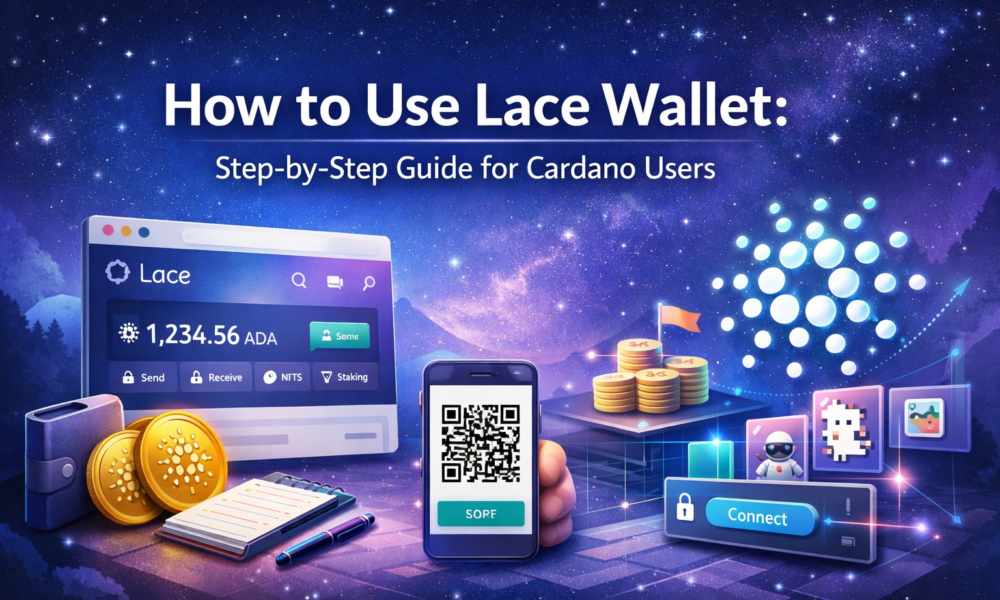
How to Use Lace Wallet: Step-by-Step Guide for Cardano Users

Published

on

How to Use Lace Wallet: Step-by-Step Guide for Cardano Users

Lace Wallet is a non-custodial wallet built specifically for the Cardano blockchain. This guide explains how to install, set up, secure, and use Lace Wallet to manage ADA, stake assets, and interact with Cardano Web3 applications.

⚠️ Important: Lace Wallet is self-custody. You are responsible for protecting your recovery phrase.

What You Need Before Getting Started

Before installing Lace Wallet, make sure you:

  • Use a secure and updated browser
  • Have a safe place to store your recovery phrase offline
  • Understand that losing your recovery phrase means permanent loss of access

Step 1: Install Lace Wallet

  1. Visit the official Lace Wallet website.
  2. Download the browser extension.
  3. Add it to your browser.
  4. Open the extension to begin setup.

“Lace Wallet browser extension installation page”

Step 2: Create a New Wallet

  1. Select Create New Wallet
  2. Set a secure password
  3. Write down your 12- or 24-word recovery phrase
  4. Confirm the recovery phrase when prompted

⚠️ Do not:

  • Take screenshots of your recovery phrase
  • Store it in email or cloud storage
  • Share it with anyone

“Lace Wallet recovery phrase generation screen”

Step 3: Understanding the Dashboard

Once setup is complete, you will see:

  • ADA balance
  • Transaction history
  • NFT section
  • Staking tab
  • Send and Receive buttons

The dashboard provides a clear overview of your Cardano assets.

“Lace Wallet dashboard showing ADA balance and navigation tabs”

Step 4: Receiving ADA

To receive ADA:

  1. Click Receive
  2. Copy your wallet address
  3. Share it with the sender
  4. Wait for blockchain confirmation

Always verify the address before sharing.

“Lace Wallet receive ADA screen with QR code”

Step 5: Sending ADA

To send ADA:

  1. Click Send
  2. Enter recipient’s Cardano address
  3. Enter the amount
  4. Review network fees
  5. Confirm transaction

You must approve the transaction before it is submitted to the Cardano network.

“Lace Wallet send ADA confirmation screen”

Step 6: Staking ADA in Lace Wallet

Lace Wallet supports ADA delegation.

To stake ADA:

  1. Navigate to the Staking section
  2. Browse available stake pools
  3. Select a pool
  4. Confirm delegation

Your ADA remains in your wallet while delegated. Rewards are distributed automatically according to Cardano’s staking schedule.

“Lace Wallet staking dashboard with delegation option”

Step 7: Managing NFTs

Lace Wallet supports Cardano native NFTs.

To manage NFTs:

  • Open the NFT section
  • View your NFT collection
  • Select an NFT to view details
  • Send NFTs using the Send function

NFTs follow Cardano token standards and remain fully in your control.

“Lace Wallet NFT gallery interface”

Step 8: Connecting to Cardano dApps

To connect to decentralized applications:

  1. Visit a Cardano-based dApp
  2. Select “Connect Wallet”
  3. Choose Lace Wallet
  4. Approve the connection request

Always verify the dApp domain before connecting.

“Lace Wallet dApp connection approval window”

Step 9: Using a Hardware Wallet (Optional Advanced Security)

For additional protection:

  • Connect a supported hardware wallet
  • Approve transactions on the hardware device
  • Keep private keys offline

This reduces exposure to browser-based risks.

“Lace Wallet hardware wallet integration screen”

Security Best Practices When Using Lace Wallet

  • Store recovery phrase offline
  • Use hardware wallets for large balances
  • Keep browser updated
  • Bookmark official websites
  • Avoid suspicious links or phishing emails

Self-custody requires active security awareness.

Common Issues and Troubleshooting

Transaction not appearing?

Wait for Cardano network confirmation.

Wrong address entered?

Blockchain transactions are irreversible.

Lost recovery phrase?

Access cannot be restored.

Frequently Asked Questions

Is Lace Wallet free to use?

Yes. Only Cardano network transaction fees apply.

Can I unstake ADA anytime?

Yes, but rewards follow Cardano epoch timing.

Is Lace Wallet custodial?

No. Users control their private keys.

Final Thoughts

Lace Wallet provides a streamlined way to manage ADA, stake securely, and access Cardano’s Web3 ecosystem. Because it is non-custodial, users must take responsibility for security and recovery m anagement.

When used properly, Lace Wallet offers a secure and transparent way to interact with the Cardano Blockchain.

Continue Reading
Click to comment

Leave a Reply

Your email address will not be published. Required fields are marked *

Crypto

Robthecoins Business Explained: Model, Risks & Growth

Published

on

By

Robthecoins Business

The digital finance world is rapidly evolving, and new platforms are constantly emerging that promise innovative ways to earn, invest, and engage with cryptocurrency ecosystems. Among these rising names, the concept of the robthecoins business has attracted attention due to its unconventional structure and bold claims in online financial communities. As more users search for alternative income streams, understanding how such systems operate becomes crucial for making informed decisions.

At its core, the robthecoins business represents a blend of digital asset interaction, user engagement incentives, and platform-driven reward systems. However, like many modern crypto-related ventures, it also raises questions about transparency, sustainability, and long-term viability. This article explores the structure, operational logic, risks, and potential future of this business model in depth, offering a clear perspective for readers who want to understand how it functions in the broader digital economy.

We will break down its ecosystem, revenue mechanics, user participation flow, and associated risks while also analyzing its position in the competitive fintech landscape. By the end, you will have a comprehensive understanding of how such platforms operate and what considerations matter most before engaging with them.


Understanding the Digital Ecosystem Behind Robthecoins Business

The foundation of the modern crypto economy lies in decentralized systems, blockchain protocols, and digital reward mechanisms. Within this environment, the robthecoins business is often described as a hybrid model combining elements of gaming, investment simulation, and reward-based participation. Users are typically encouraged to engage with platform activities that may involve tasks, deposits, or digital interactions.

What makes this ecosystem intriguing is its reliance on user-driven growth. Instead of traditional financial structures, it often depends on community participation and continuous engagement. This means the platform’s activity level and perceived value are directly influenced by how many users are actively involved. As engagement increases, so does the circulation of internal rewards or tokens within the system.

Another key aspect of this ecosystem is its digital accessibility. Most users can join through simple registration processes, making it attractive to individuals looking for quick entry into crypto-related platforms. However, accessibility alone does not guarantee sustainability. The underlying structure must support real value creation, which is often where questions arise.

In analyzing the robthecoins business ecosystem, it becomes clear that its success depends heavily on continuous user inflow and engagement cycles. Without these, the system may struggle to maintain momentum or perceived profitability over time.

Will You Check This Article: dgmnews.com: Complete Guide to Modern Digital News Platform

robthecoins business Model and Revenue Structure Explained

The robthecoins business model is typically structured around multiple digital revenue streams that may include transaction fees, user participation incentives, and internal token circulation. While the exact mechanism may vary depending on platform updates, the general idea revolves around creating value through user activity rather than traditional product sales.

One of the core components of this model is the incentive-based system. Users are often rewarded for completing specific tasks, participating in platform events, or maintaining active engagement. These rewards are usually distributed in the form of internal credits or digital tokens, which may or may not have external market value.

Another element involves reinvestment cycles. Users are sometimes encouraged to reinvest their earnings back into the platform to unlock higher returns or benefits. This creates a loop where funds and rewards circulate within the system, potentially increasing platform liquidity but also raising concerns about dependency on new user participation.

The robthecoins business structure can also include referral mechanisms, where existing users invite new participants in exchange for bonuses. This type of growth strategy accelerates user acquisition but may also resemble multi-level incentive structures commonly seen in digital referral ecosystems.

Overall, while the revenue model appears dynamic and engaging, its long-term sustainability depends on external value generation and not just internal circulation.


Operational Mechanics of Robthecoins Business Platforms

To understand how these platforms function on a practical level, it is important to examine their operational mechanics. The robthecoins business generally operates through a web-based or app-based interface where users can manage accounts, track earnings, and participate in activities.

The first layer of operation involves account creation and onboarding. Users sign up, verify their profiles, and gain access to the platform dashboard. Once inside, they are introduced to available earning mechanisms, which may include tasks, investments, or interactive features.

The second layer focuses on transaction flow. Users may deposit funds or participate using internal credits, which are then allocated into different earning pools. These pools are designed to simulate returns over time, encouraging users to stay active within the ecosystem.

Additionally, automation plays a significant role in such platforms. Many processes, including reward distribution and balance updates, are handled through automated systems. This reduces manual intervention and creates a seamless user experience, although it also limits transparency in some cases.

Ultimately, the operational design of the robthecoins business is centered around engagement efficiency, ensuring that users remain active and continuously interact with the system’s features.


User Participation and Engagement Dynamics

User participation is the backbone of any digital financial ecosystem, and the robthecoins business is no exception. The platform typically relies on continuous engagement to maintain internal circulation and reward distribution.

One major factor driving participation is the promise of returns. Users are often attracted by the possibility of earning rewards through simple interactions. This perceived accessibility lowers the entry barrier and increases participation rates, especially among beginners in the crypto space.

Another important aspect is gamification. Many platforms incorporate game-like features such as levels, achievements, and progress tracking. These elements encourage users to remain active for longer periods and create a sense of accomplishment.

Community influence also plays a significant role. Online discussions, social media exposure, and referral networks contribute to user growth. As more individuals join, the system gains momentum, further reinforcing engagement cycles.

However, engagement-driven systems also face challenges. If user interest declines or reward expectations are not met, participation levels can drop quickly. This makes sustained engagement a critical factor for the stability of the robthecoins business.


Security Concerns and Risk Factors in Robthecoins Business

While digital financial platforms offer innovation, they also come with significant risks. The robthecoins business is no exception, and users must carefully evaluate potential security and financial concerns before participating.

One of the primary risks involves transparency. In many such platforms, the internal mechanisms behind reward distribution and fund management are not fully disclosed. This lack of clarity can make it difficult for users to assess true financial stability.

Another concern is volatility. If rewards are tied to internal tokens or digital credits, their value may fluctuate based on platform activity rather than external market forces. This creates uncertainty regarding real-world value conversion.

Security vulnerabilities also play a role. Any online platform handling user data and digital transactions must ensure strong cybersecurity measures. Weak security protocols can expose users to risks such as data breaches or unauthorized access.

Finally, dependency on continuous user inflow is a structural risk. If growth slows down, the system may face liquidity issues, impacting reward distribution and overall functionality. These factors highlight the importance of cautious participation in the robthecoins business ecosystem.


Market Positioning and Competitive Landscape

In the broader fintech and crypto environment, platforms like the robthecoins business compete with a wide range of decentralized finance (DeFi) applications, trading platforms, and blockchain-based earning systems.

One of the key differentiators is simplicity. Many users are drawn to platforms that offer easy onboarding and minimal technical complexity. This gives such systems an advantage over more complex trading or investment platforms.

However, competition in the digital finance sector is intense. Established crypto exchanges and DeFi protocols offer more transparency, regulatory compliance, and proven financial mechanisms. This makes it challenging for newer models to maintain long-term credibility.

Marketing and community engagement also play a major role in positioning. Platforms that successfully build strong online communities tend to perform better in user acquisition and retention. The robthecoins business relies heavily on this aspect to maintain visibility.

Ultimately, its market position is shaped by perception, user trust, and the ability to demonstrate consistent value in a highly competitive digital ecosystem.


Future Outlook and Sustainability Challenges

The future of any digital financial platform depends on its adaptability, transparency, and ability to generate real value. For the robthecoins business, sustainability is a central concern that determines long-term viability.

One potential growth path involves integrating more transparent blockchain-based systems that allow users to verify transactions and reward distributions. This could improve trust and attract more serious investors.

Another important factor is regulatory alignment. As governments continue to develop frameworks for digital assets, platforms must adapt to comply with financial laws and user protection standards. Failure to do so may limit growth opportunities.

Innovation will also play a key role. Introducing new features, expanding utility, and enhancing user experience can help maintain engagement levels over time. Without innovation, user interest may decline.

In conclusion, the sustainability of the robthecoins business depends on balancing user incentives with real-world value creation. Only platforms that evolve beyond internal circulation models are likely to succeed in the long term.


Conclusion

The robthecoins business represents a modern digital financial concept built around user engagement, reward systems, and crypto-inspired mechanics. While it offers an accessible entry point into the world of digital earnings, it also carries inherent risks related to transparency, sustainability, and market dependency.

Understanding its structure, operational flow, and engagement model is essential for anyone considering participation. Like many emerging platforms in the digital finance space, it operates in a rapidly evolving environment where innovation and caution must go hand in hand.

Ultimately, the robthecoins business highlights both the potential and challenges of modern decentralized ecosystems. Users should approach it with awareness, conduct thorough research, and prioritize long-term financial safety over short-term incentives.

Read More: Parkmagazineny.co.uk

Continue Reading

Crypto

Coin Markup Explained: Pricing Secrets and Profit Strategies

Published

on

By

Coin Markup

Understanding coin markup is essential for collectors, dealers, and investors who want to navigate the numismatic market with confidence. Whether you are buying rare coins, selling a collection, or simply exploring the world of precious metals, knowing how prices are marked up can significantly impact your financial decisions. Coin pricing is not just about metal value—it involves rarity, demand, grading, and dealer margins. This article explores the intricate mechanisms behind coin pricing and reveals how coin markup influences both buyers and sellers. By the end, you will have a clear understanding of how markup works and how to make smarter decisions in the coin market.


Understanding Coin Markup in Numismatics

Coin markup refers to the difference between the intrinsic value of a coin and its retail price. Dealers apply a markup to cover operational costs, risks, and profit margins. This markup can vary widely depending on the type of coin, its condition, and market demand. In numismatics, coins are not simply valued for their metal content but also for historical significance and rarity, which heavily influence coin markup.

A key aspect of coin markup is that it is not fixed. Market conditions, supply and demand, and dealer reputation all affect how much a coin is marked up. For example, rare collectible coins often carry higher markups compared to bullion coins. Understanding these differences helps collectors make informed purchasing decisions and avoid overpaying.

Will You Check this Article: Busy Lizzie: Complete Guide to Growing Vibrant Impatiens

Factors That Influence Coin Markup

Several variables determine the level of coin markup in the marketplace. One of the most important is rarity. The rarer a coin, the higher its potential markup due to limited availability. Condition or grading also plays a crucial role, as coins in pristine condition are more desirable and command higher prices.

Another factor is demand. High demand for certain coins, such as commemorative editions or historically significant pieces, leads to increased markup. Dealer overhead, including storage, insurance, and marketing, also contributes to the final markup. These combined factors create a dynamic pricing environment that can fluctuate frequently.


Coin Markup in Bullion vs Collectible Coins

Bullion coins, such as gold and silver coins, typically have lower coin markup compared to collectible coins. This is because bullion coins are valued primarily based on their metal content, making their pricing more transparent and tied to global metal markets. The markup for bullion coins is usually a small percentage above the spot price.

On the other hand, collectible coins have significantly higher markup due to factors like rarity, age, and historical importance. Dealers often apply a substantial markup because these coins are not easily replaceable. Collectors are willing to pay a premium, which increases the overall markup in this segment of the market.


Dealer Pricing Strategies and Coin Markup

Coin dealers use various pricing strategies to determine coin markup. One common approach is dynamic pricing, where prices are adjusted based on market conditions and inventory levels. Dealers may increase markup when demand is high and reduce it when they need to clear stock.

Another strategy involves tiered pricing, where different coins have different markup levels based on their category. For instance, investment-grade coins may have lower markup compared to rare collectibles. This helps dealers balance competitiveness with profitability while maintaining consistent cash flow.


How Coin Markup Affects Buyers and Sellers

For buyers, coin markup directly impacts the affordability of a coin. Higher markup means higher upfront cost, which can reduce potential investment returns. Buyers must carefully evaluate whether the markup aligns with the coin’s true value before making a purchase.

Sellers are also affected by coin markup, as it influences resale prices. Dealers typically buy coins at a lower price than their retail value, allowing them to apply markup when reselling. Understanding this gap helps sellers negotiate better deals and set realistic expectations for their coin collections.


How to Evaluate Fair Coin Markup

Evaluating fair coin markup requires research and comparison. Buyers should compare prices across multiple dealers and platforms to determine the average markup for a particular coin. This helps identify whether a price is reasonable or inflated.

Additionally, using price guides and market reports can provide insight into standard markup ranges. Trusted grading services also help establish a coin’s value, making it easier to assess whether the markup is justified. Educated buyers are less likely to overpay and more likely to make profitable investments.


Risks and Misconceptions About Coin Markup

One common misconception is that high coin markup always indicates overpricing. In reality, high markup may be justified if a coin is rare, highly graded, or in strong demand. Misunderstanding this can lead to missed opportunities in the market.

However, there are risks associated with excessive markup. Unscrupulous dealers may inflate prices beyond reasonable levels, especially targeting inexperienced buyers. To avoid such risks, it is important to deal with reputable sellers and verify market prices before committing to a purchase.


Conclusion

Understanding coin markup is crucial for anyone involved in the coin market, whether as a collector, investor, or dealer. It plays a significant role in determining the final price of a coin and directly impacts buying and selling decisions. By analyzing factors such as rarity, demand, grading, and dealer strategies, you can better evaluate pricing and avoid unnecessary losses.

Mastering coin markup allows you to make informed decisions, identify fair deals, and build a valuable coin portfolio over time. With the right knowledge and careful research, navigating the world of coin pricing becomes much more manageable and profitable.

Read More: Parkmagazineny.co.uk

Continue Reading

Crypto

itradercoin.com Review: A Practical Look at the Platform

Published

on

By

itradercoin.com

The online trading space is crowded, noisy, and often confusing, which is why platforms like itradercoin.com naturally raise curiosity among traders. When a new or lesser known trading website appears, the first question is never about profits, but about trust, usability, and real value. This article takes a grounded look at how itradercoin.com presents itself, how it functions in practice, and what users should realistically expect. The goal is clarity, not hype, and practical understanding over promises.

Understanding What itradercoin.com Claims to Offer

itradercoin.com positions itself as a digital trading platform aimed at users interested in online financial markets. From the surface, it highlights accessibility and opportunity, which are common themes in modern trading websites. These claims matter because they shape first impressions and influence whether a user even considers creating an account or exploring further.

What stands out early is the focus on simplified access rather than deep technical explanations. This can be helpful for newcomers who feel overwhelmed by complex dashboards. At the same time, experienced traders may question whether simplicity comes at the cost of control or transparency, which is a fair concern in any trading environment.

Understanding these claims helps users frame expectations correctly. When a platform emphasizes ease and opportunity, it often targets entry level traders. Knowing this allows readers to assess whether the platform aligns with their experience level or if they may outgrow its tools quickly.

Will You Check This Article: keygeninja: Understanding the Platform and Its Risks

User Experience and Platform Navigation

The layout and navigation of itradercoin.com play a major role in how users interact with the platform daily. A clean interface reduces friction, especially during time sensitive trading decisions. From a usability standpoint, the platform appears designed to minimize clutter and guide users through basic actions without confusion.

Smooth navigation matters because trading already involves enough mental load. If users struggle to find essential features or interpret account information, mistakes become more likely. Platforms that prioritize clarity tend to create a calmer environment, which can indirectly support better decision making.

However, simplicity can also limit customization. Some traders prefer detailed charts, layered indicators, and advanced controls. The balance between ease and depth determines whether a platform feels supportive or restrictive over long term use.

Account Setup and Onboarding Process

Creating an account on itradercoin.com follows a familiar structure seen across many online trading platforms. The registration process aims to be quick, reducing barriers for new users. This approach matters because lengthy onboarding often discourages people before they even explore the platform’s features.

Verification steps are part of the process, which is important for compliance and basic security. While this can feel inconvenient, it also signals an attempt to operate within standard regulatory expectations. Users should always view verification as a protective step rather than an obstacle.

The onboarding experience sets the tone for trust. Clear instructions and responsive guidance help users feel supported. When onboarding feels rushed or unclear, doubts can surface early, which affects long term confidence in the platform.

Trading Tools and Available Features

The tools offered by itradercoin.com appear focused on core trading functionality rather than advanced experimentation. Basic charting, asset selection, and order execution form the backbone of the experience. For many users, this is sufficient, especially when learning market behavior.

Practical tools matter more than flashy features. Traders often benefit from stable execution, readable charts, and clear pricing information. When these essentials work reliably, users can focus on strategy rather than troubleshooting software limitations.

That said, advanced traders may notice gaps in customization or analytical depth. This does not make the platform ineffective, but it defines its target audience more clearly. Knowing what tools are present and which are absent helps users avoid mismatched expectations.

Security, Transparency, and Trust Factors

Trust is the foundation of any online trading platform, and itradercoin.com is no exception. Users want to know how their data is handled and whether basic security protocols are in place. Transparency around operations and policies plays a major role in building confidence.

Clear terms, visible policies, and consistent communication help reduce uncertainty. When platforms explain how funds are managed or how disputes are handled, users feel more in control. A lack of clarity, on the other hand, often leads to hesitation or withdrawal.

Security is not just technical. It also includes honest representation of risks. Platforms that avoid exaggerated claims and encourage responsible behavior tend to earn more long term trust from their user base.

Who itradercoin.com May Be Best Suited For

Not every trading platform fits every type of user, and itradercoin.com seems tailored toward a specific audience. New or casual traders may appreciate the straightforward design and limited complexity. This lowers the intimidation factor and encourages exploration.

Users looking for a learning focused environment may also find value here. A platform that does not overwhelm with excessive options allows beginners to focus on understanding market basics before scaling up their strategies.

More advanced traders may view the platform as a starting point rather than a permanent solution. Recognizing this distinction helps users choose platforms that match their current goals rather than forcing a fit that may lead to frustration.

Realistic Expectations and Common Pitfalls

Setting realistic expectations is essential when engaging with itradercoin.com or any trading service. Trading involves risk, and no platform can eliminate uncertainty. Understanding this prevents emotional decision making and unrealistic profit expectations.

One common pitfall is assuming that ease of use guarantees success. While a friendly interface helps, outcomes still depend on market knowledge, discipline, and risk management. Platforms are tools, not guarantees.

Being aware of limitations allows users to approach trading with a balanced mindset. When users understand both the strengths and boundaries of a platform, they are better equipped to use it responsibly and avoid unnecessary losses.

Conclusion

itradercoin.com presents itself as an accessible entry point into online trading, emphasizing simplicity and approachability. For beginners or users seeking a less complex trading environment, it may offer a comfortable starting space. The platform’s design choices suggest a focus on ease rather than advanced depth, which is not inherently negative. As with any trading platform, success depends less on the website itself and more on how thoughtfully and responsibly it is used.

Read More: dollartimes.co.uk 

Continue Reading

Trending