Introduction
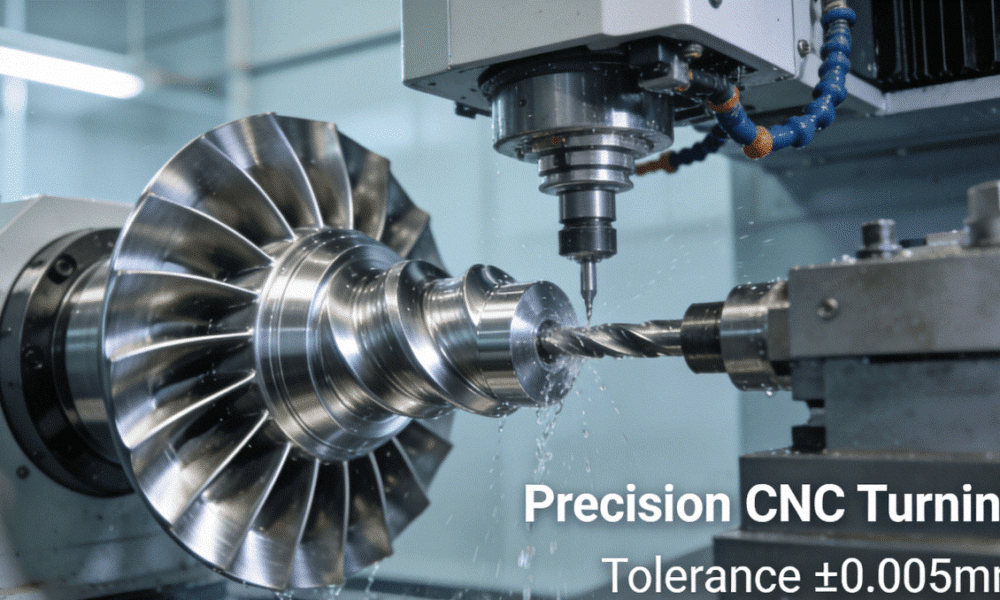
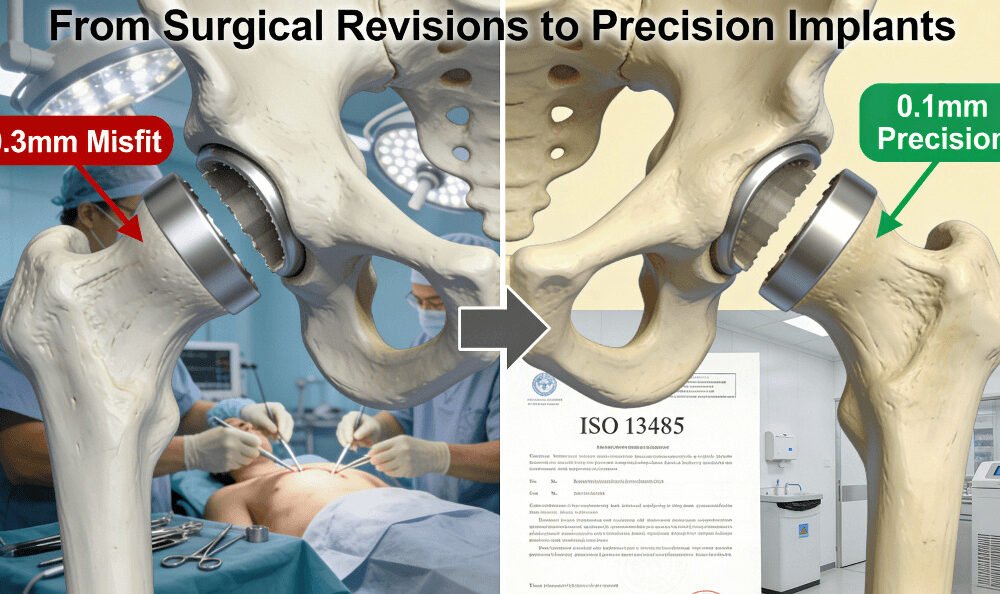
The medical device industry is facing an unprecedented and costly issue with custom implants that experience over 0.3mm misfit with the patient’s anatomy. This directly translates to surgical revisions and increases healthcare costs. The issue has been exacerbated by the inability of 3-axis CNC machining to consistently meet the needs of complex and patient-specific geometries. There is an unmet precision need. The issue stems from the absence of an overarching methodology that combines 5-axis technology with robust quality certifications, such as ISO 13485, and biocompatibility testing.
This article will show that an overarching methodology that combines 5-axis CNC machining addresses the fundamental issues of micron-level precision and surface finish, and durability of sterilization.
What Are the Critical Technical Hurdles in Medical Device Manufacturing That 5-Axis CNC Solves?
The medical device manufacturing industry is facing an unprecedented challenge that requires sub-micron precision and surface finish. The challenges with the current technology are fundamental and are addressed by 5-axis CNC machining.
1.The Limitations of Multi-Setup Machining on Geometric Accuracy
The 3-axis machining process involves multiple part repositions in order to achieve the machining of complex geometries. This results in positional inaccuracy, as each machining setup provides an independent datum point. This results in cumulative inaccuracy, which may even exceed the 0.3mm tolerance limit. This inconsistency in part geometry is the main reason for poor anatomical fit, thereby necessitating intraoperative corrections. The single setup advantage of 5-axis machining completely removes this inaccuracy by machining the entire part in relation to a single datum point.
2. Achieving Superior Surface Finishes for Biocompatibility
In 3-axis machining processes, achieving a surface finish with an average roughness Ra ≤ 0.4 µm is extremely challenging. This stems from the characteristics of linear machining processes — inefficient tool movements may be required to form sharp features, necessitating secondary machining operations, which can lead to deviations in critical dimensional parameters. Through 5-axis medical device manufacturing, manufacturers can achieve direct machining of surfaces with Ra 0.4 µm because it maintains the optimal relative position between the tool and the workpiece surface, enabling smooth cutting movements. This advantage is particularly important when machining implant-grade surfaces, ensuring both surface finish and part accuracy..
3. Overcoming Tool Accessibility and Vibration in Complex Structures
Cavities and undercuts are common in lightweight and porous bone implants. These are difficult to machine using 3-axis machining. The designer has to compromise on the design. 5-axis machining overcomes this difficulty. The tool length and rigidity are improved by tilting the workpiece. This improves machining stability. The complex lattice structures are critical in bone implants. These are required for bone ingrowth. The machining stability is critical in machining these complex structures without tool deflection and breaking.
How Does ISO 13485 Certification Enhance Precision and Traceability in CNC Processes?
It is believed that precision machining depends only on the equipment. However, precision machining depends on an effective quality management system. ISO 13485:2016 is the standard that provides this foundation.
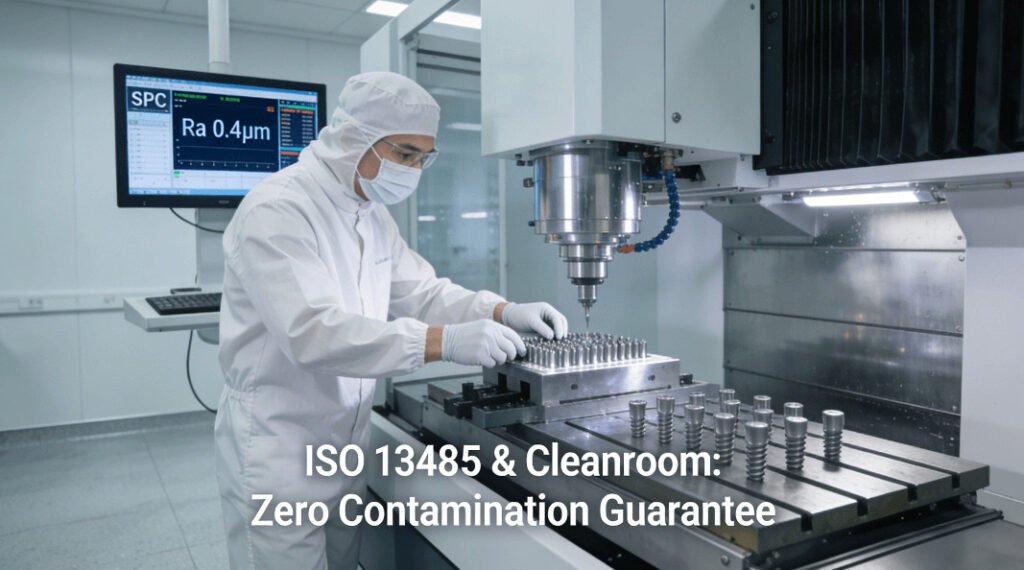
- Establishing a Framework for Process Validation and Control: While other quality systems are generic and applicable to many industries, ISO 13485</strong> is unique in that its requirements are specifically and exclusively relevant to the medical device sector. It calls for validation of every critical process that goes into the manufacturing of medical devices. This includes the validation of CNC machining parameters, tool life management strategies, and inspection methodologies. This means that the cutting speed and tool path that have been validated and shown to produce an Ra 0.4µm surface finish must be followed and adhered to.
- Ensuring Full Traceability for Risk Management and UDI Compliance: In case of an issue with the device after deployment in the market, traceability of the device back to its raw material origin, machining equipment, and machining personnel is critical. ISO 13485 calls for traceability that links every device back to its entire manufacturing history. This is critical and cannot be overemphasized. It is also highly relevant and compliant with the regulations that call for Unique Device Identification. This level of control and traceability is critical in ensuring that implants are manufactured with the specifications that are unique and relevant to individual patients.
- Integrating Real-Time SPC for Proactive Quality Assurance: A certified system features Statistical Process Control (SPC) integrated into production. Key dimensions and surface finishes are measured in real-time, with data analysis to recognize trends toward tolerance limits. This is a proactive quality assurance process that enables adjustments to be made before producing any defective parts. The process is a “prevent and assure” approach, as opposed to a “detect and scrap” approach. This is a foundational component in achieving a zero defect mindset, a necessity in medical device manufacturing.
What Strategies Ensure Sub-Micron Surface Finishes for Successful Osseointegration?
Osseointegration is the biological bonding between the implant and the bone tissue. This process is largely influenced by the surface properties of the implant. Sub-micron surface finish is a prerequisite, and this is accomplished with a multi-step machining process.
1. Optimized Dynamic Toolpaths and Tool Selection
The basis of an exceptional finish starts with the CAM programming stage of the machine. High-end 5-axis toolpaths use constant scallop height techniques, which provide smooth, non-stop motion in the direction of the cut, thus eliminating witness lines. In addition to this, the use of micro-grain carbide tools with certain coatings prevents the formation of built-up edge, thus allowing faster cutting speeds to achieve a predictable, uniform finish directly from the machine.
2. Multi-Axis Mechanical Polishing and Micro-Finishing Techniques
In cases where the finish needs to be mirror-like, a second machine, a CNC-controlled polishing machine, comes into play. In this machine, the implant is subjected to a fixed pressure through the use of non-contaminating, soft tools attached to the 5-axis machine, which polishes the implant in a predetermined path. This ensures that the surfaces of the implant, which may be curved, receive an even finish, unlike the manual method, which would require an individual to manually polish the implant, thus removing the microscopic peaks to bring the Ra down to the desired level for optimal cellular response.
3. Adherence to Geometric Dimensioning and Tolerancing Standards
Without control of form, control of surface finish is irrelevant. It is essential to refer to the ASME Y14.5 standard for geometric dimensioning and tolerancing (GD&T). The use of flatness, cylindricity, and surface profile as a parameter of size is essential in determining the acceptable variation in the final shape of the implant. Machining to these exacting standards ensures that the functional geometry of the implant matches its bio-functional surface.
How Can Manufacturers Achieve Anatomical Matching with 0.1mm Tolerance Using 5-Axis Technology?
The vision of personalized medicine is realized through an unbroken digital thread that converts medical imaging into a physically perfect implant. 5-axis CNC technology is the key enabler in this process.
1. From CT Scan to Machinable CAD Model
The process starts with the creation of a high-fidelity 3D CAD model based on the patient’s CT or MRI scan. The 3D model is used to create the patient-specific implant geometry, which must match perfectly with the anatomy. The 3D CAD model is then imported into a sophisticated CAM system to create the machining plans. The CAM software creates optimal multi-axis machining plans, taking into consideration the free-form surfaces of the anatomy.
2. In-Process Verification and Closed-Loop Feedback
In order to ensure the accuracy of the part being machined, the part may be fitted with an on-machine probing system, which will use the touch trigger probe to sense the critical datums and features of the part being machined, thus verifying the part being machined in real-time. If necessary, compensations may be made to the part to ensure that it meets the specifications before the machining of the part is complete, thus providing a powerful feature to ensure the 0.1mm tolerance requirement is met.
3. Final Validation by 3D Scanning and FEA Analysis
The finished product, after machining, is subjected to a complete 3D scan using a Coordinate Measuring Machine (CMM) or a laser scanning device.
What Process Controls Guarantee Long-Term Reliability of Surgical Tools Beyond 200 Sterilization Cycles?
It is a requirement that surgical instruments and reusable implant components maintain their performance and product integrity after being disinfected through multiple sterilization cycles. By utilizing the right materials and machining processes and performing long, term testing, the devices remain reliable over time.
1. Material Selection for Enhanced Durability and Biocompatibility
The choice of material is the main factor for a product to be dependable since it is one of the major aspects of product performance. It is a matter of selecting a specific material according to ASTM F136 Titanium or Cobalt Chrome alloys that have excellent strength, to, weight ratio, are corrosion, resistant, and biocompatible.
2. Precision Machining to Eliminate Micro-Crack Initiation Points
The reliability of the tool is greatly determined by the surface quality. Any microscopic imperfections or sharp corners that might have been created during the machining process can become crack initiation points</strong>. 5-axis machining allows for smooth cutting and control of corner radius, ensuring fatigue resistance. It is the precision of the machining process that allows the tools to extend far beyond the standard 200 cycle life.
3. Validated Sterilization Protocols and Accelerated Life Testing
Device manufacturers have to validate that the device will endure various sterilization procedures (autoclaving, gamma radiation, etc. ). Accelerated life testing reproduces normal wear for years, and the device is checked for functionality, precision, and integrity post the test. This is a significant aspect of the regulatory approval process for the Food and Drug Administration (FDA).
How Does a Sterile Clean Room Environment and Full Traceability System Help Mitigate Contamination Risks?
For makeup implant devices, contamination control is equally as important as dimensional accuracy. A contamination control strategy in depth is a mix of environmental and procedural controls.
- ISO Class 7 Clean Room Machining and Handling: Implant device components manufacturing and all handling operations are done in an ISO Class 7 Clean Room conducted under strict control. This makes certain that implant devices are free from contamination of microorganisms or particles. Workers follow gowning procedures rigorously, and every tool and equipment used for such operations is dedicated, cleaned, and sterilized.
- Comprehensive Particle and Bioburden Monitoring: The need for a proactive monitoring program is critical in this regard.
- Blockchain-Enabled Data Integrity for Ultimate Traceability: The utilization of traceability technology, which is at its most advanced with the utilization of blockchain technology, will be able to give an immutable record of the product’s history. All activities, from the origin of the materials utilized in the production process to the final stages of sterilization, will be recorded and included in an unforgeable record of the product’s history. The need to ensure environmental sustainability, as underscored in resources provided by the U.S. Environmental Protection Agency, is also critical in this regard.
Conclusion
It is not possible to be successful in the custom medical implant manufacturing business with high-tech equipment. What is required is a whole system that integrates the best precision 5-axis CNC technology, the highest level of ISO 13485 quality standards, and the most stringent level of protection against contamination. This will allow for the elimination of errors that result in surgical revisions. It will ensure that the first time is always the best time with perfect accuracy, improved patient safety, and effortless compliance. By adopting this philosophy, manufacturers will be able to meet the escalating requirements of personalized medicine with confidence. Those wishing to apply this philosophy in practice should first seek advice from a professional in precision 5-axis CNC machining services.
FAQs
Q1: What is the smallest feature size possible in 5, axis medical device manufacturing?
A. With 5, axis CNC machining, a feature size of 0.1mm can be achieved.
Q2: How does ISO 13485 affect the cost and timeline of custom implant production?
A: By obtaining ISO 13485 certification, the company can lower its costs in the long run since the need for rework is lessened through process validation that is inherent in the certified processes. Also, it can help in reducing the time of the custom implant getting to the market as demonstrated in different case studies on the ISO 13485 standard.
Q3:What materials are most compatible with implants for 5, axis machining?
A:To manufacture implants by 5, axis machining, Ti, 6Al, 4V alloy, PEEK, and Cobalt, Chrome should be selected, as they are easy to machine and biocompatible with the human body.
Q4:How can the accuracy of patient, specific implants be confirmed?
A: On, machine probing and 3D scanning after the manufacturing process using CMMs facilitate the verification of the accuracy of the implants.
H3: Author Bio
The author is a precision manufacturing technology expert based at LS Manufacturing. The company team works hand, in, hand with medical device engineers and researchers to figure out solutions for complicated components in the areas of orthopedics, surgical robotics. diagnostic equipment. After obtaining the required certifications, their team applies cutting, edge technologies to produce high, quality, compliant solutions.Should you want more. details reach out to them today for a totally free, no, obligation project assessment and Design for Manufacturability (DFM) analysis. Allow them to assist you with transforming your ideas into clinically successful realities.