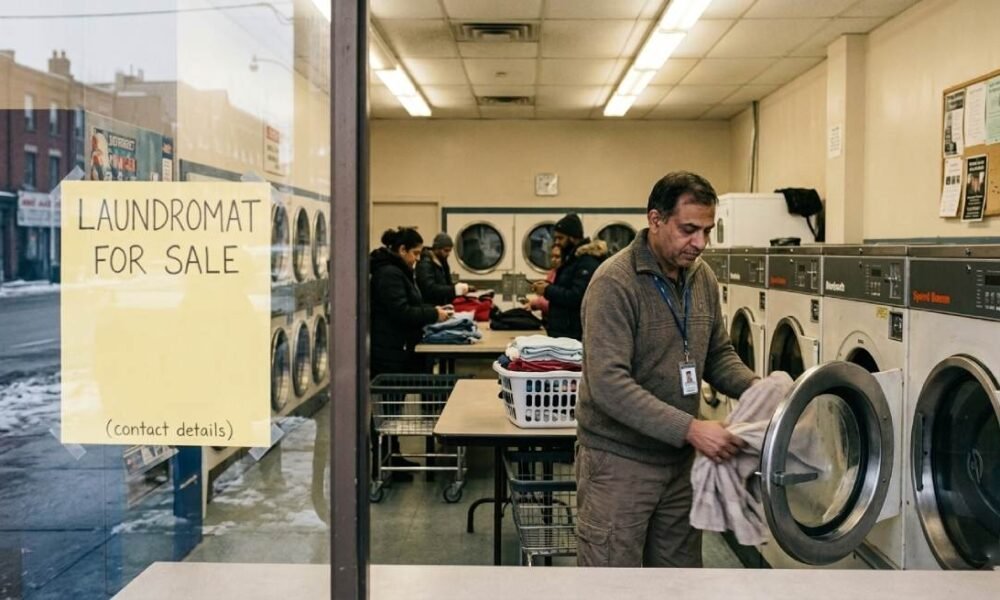
Buying a laundromat for sale in Canada can look like a simple “set it and forget it” investment. Machines run, customers come and go, and money appears. In reality, laundromats can produce stable cash flow, but they are not truly passive unless the business is already systemized and you’re willing to pay for management. For most buyers, it’s better described as low-complexity ownership, not effortless income.
What you will learn in this article
- How a laundromat business in Canada actually makes money
- When a laundromat can feel semi-passive and when it becomes hands-on
- The real operating costs that drive profitability
- How to evaluate a coin laundry business for sale in Canada
- What makes some laundromats consistently profitable
- The biggest risks first-time buyers overlook
Why laundromats attract buyers in Canada
Laundromats appeal to buyers because demand is steady and predictable. Laundry is not a trend-driven service. People need clean clothes every week regardless of the economic cycle. In many Canadian cities, a large share of residents live in apartments or rental units without private washers and dryers. Students, short-term renters, and newcomers to the country often rely on shared laundry services. Because of this, laundromats in dense urban areas, student districts, and immigrant-heavy neighborhoods can maintain consistent traffic throughout the year. Buyers who are researching the market often start by comparing real listings and operating businesses across the country, for example by exploring opportunities and market examples on https://en-ca.yescapo.com, which helps illustrate how laundromat investments and other small businesses are actually structured in Canada.
Another reason laundromats attract first-time buyers is the simplicity of the operating model. The business generates revenue through machine usage. Customers pay per wash and per dry, and the owner’s income depends on how frequently machines are used during the day. This makes performance relatively transparent. You can observe foot traffic, see how busy the machines are, and quickly understand whether the location has steady demand. Compared with more complex businesses, laundromats have fewer moving parts. There is no inventory to manage and relatively limited staff requirements if the business is self-service.
That said, laundromats are not automatically easy money. Their success depends heavily on a few critical fundamentals. Location plays a major role because laundromats rely on local demand rather than destination traffic. Equipment quality also matters because older machines break more often and consume more water and energy. Cost control is another key factor. Utility bills, rent, and maintenance can quickly reduce margins if they are not carefully managed. When these fundamentals are weak, even a busy laundromat can struggle financially.
How laundromats actually make money
Most laundromats earn the majority of revenue from self-service washers and dryers. The business lives or dies based on machine utilization, pricing per cycle, and how reliably the equipment runs. If machines are constantly down, customers leave. If pricing is too high for the neighborhood, usage drops.
Many profitable laundromats add secondary income streams. Vending machines, detergent sales, and ATM fees can be meaningful over time. Some owners expand into wash-and-fold services, which can dramatically increase revenue per square foot but also adds labour and operational complexity. Others secure small commercial accounts, like local salons, gyms, or Airbnb laundry providers. These contracts can stabilize income, but they introduce dependence on a few clients, which is something buyers should evaluate carefully.
A useful mindset is to view a laundromat as a “capacity business.” Your revenue potential is limited by the number of machines, the hours you are open, and how often each machine is used. Improvements usually come from increasing utilization, improving uptime, optimizing pricing, or adding higher-margin services.
Passive income or active management?
The phrase “passive income laundromat” is often misleading. A laundromat can be semi-passive if it already has reliable equipment, predictable demand, strong systems, and someone handling day-to-day tasks. But even then, the owner typically remains responsible for decisions, budgeting, and oversight.
If you plan to be an absentee owner, your costs will be higher because you will pay for cleaners, attendants, and repairs. That can still be a good model, but only if the business has enough margin to support it. If margins are thin, absentee ownership can turn a decent laundromat into a stressful one.
If you plan to be hands-on, you can often improve profitability faster. You notice small leaks, track issues early, and maintain standards. But it becomes work, not passive income. Most buyers end up somewhere in the middle: they manage the business actively, while delegating routine tasks like cleaning and basic customer support.
How laundromats actually make money
Most laundromats generate the majority of their revenue from self-service washers and dryers. Customers pay per cycle, so the financial performance of the business depends largely on how often the machines are used during the day. This concept is known as machine utilization. If machines run frequently from morning to evening, revenue can be strong even with relatively simple operations. If machines sit idle for long periods, profitability drops quickly.
Pricing per cycle also plays an important role. Each neighborhood has a price range that customers are willing to pay for washing and drying. If the price is set too high, people may travel to another laundromat nearby. If the price is too low, the business may struggle to cover operating costs such as utilities and rent. Successful operators usually monitor local competition and adjust pricing carefully so that machines remain busy while still producing healthy margins.
Equipment reliability is another critical factor. When washers or dryers break down, revenue stops immediately because those machines are no longer generating income. Frequent breakdowns also frustrate customers, which can damage the reputation of the laundromat. For this reason, profitable laundromats often invest in regular maintenance and gradually upgrade equipment to more efficient models that consume less water and energy.
Many laundromats also earn additional revenue from secondary services. Vending machines selling detergent, fabric softener, or snacks can produce small but consistent income over time. Some locations also generate revenue through ATM fees or change machines. While these sources are usually smaller than the core laundry revenue, they help improve overall profitability.
Some owners expand further by offering wash-and-fold services. In this model, customers drop off their laundry and pay staff to wash, dry, and fold it for them. This service can significantly increase revenue per square foot because customers pay for convenience rather than just machine time. However, it also introduces labour costs and requires more operational management.
Another potential revenue source comes from commercial clients. Local gyms, salons, massage clinics, or short-term rental hosts sometimes outsource their laundry to nearby laundromats. These contracts can create stable recurring income, but they also create dependence on a few customers. If one large commercial client leaves, revenue can drop suddenly, so buyers should consider this risk when evaluating a laundromat business.
A helpful way to think about a laundromat is as a capacity-based business. Revenue potential is limited by the number of machines available, the hours the store is open, and the frequency with which each machine is used. Growth usually comes from improving utilization, reducing downtime, optimizing pricing, or introducing additional services that increase the value of each customer visit.
Passive income or active management?
The idea of a “passive income laundromat” is appealing, but it is often misunderstood. While laundromats can require less daily supervision than some other businesses, they rarely operate completely on autopilot. Even well-established locations need oversight to maintain equipment, manage costs, and ensure the business remains clean and safe for customers.
A laundromat can feel relatively passive if it already has modern machines, predictable demand, and reliable systems in place. In those situations, owners may only need to check in periodically, review financial performance, and coordinate maintenance when necessary. However, even in these cases, someone must still monitor operations, respond to problems, and make decisions about pricing, upgrades, and expenses.
If you plan to operate as an absentee owner, your operating costs will likely increase. You may need to hire attendants to clean the space, assist customers, and handle basic maintenance issues. You might also rely on service technicians for equipment repairs. This model can work well if the laundromat generates strong cash flow, but it requires enough margin to support these additional expenses.
On the other hand, owners who are more involved in daily operations can often improve profitability. Being present allows you to notice small issues before they become expensive problems. For example, a minor leak in a washing machine can increase water costs if it goes unnoticed. Regular oversight also helps maintain cleanliness and customer satisfaction, which encourages repeat visits.
In practice, many laundromat owners adopt a hybrid approach. They manage the business actively at a strategic level while delegating routine tasks. Cleaning, minor maintenance, and customer support can be handled by part-time staff, while the owner focuses on monitoring performance, controlling costs, and planning improvements.
Ultimately, laundromats are not completely passive investments. They can be simpler to manage than many retail or restaurant businesses, but they still require attention and responsible ownership. Buyers who understand this balance are more likely to treat a laundromat as a stable small business rather than a hands-off income stream.
The real costs of running a laundromat in Canada
Utility costs are a major driver of profitability. Water, electricity, and gas are not just overhead. They are the cost of delivering your core product. A laundromat with high consumption, inefficient machines, or unfavorable utility rates can look profitable on paper and still struggle in reality.
Rent is the next big factor. A great location can be worth paying for, but the lease must make sense. Rent escalations and renewal conditions can change the economics of the business, especially if the landlord renegotiates aggressively after an ownership transfer. Repairs and maintenance matter too. Machines are durable, but not immortal. Breakdowns are inevitable, and older equipment can turn maintenance into a constant drain.
Other recurring costs include insurance, cleaning, security systems, payment processing fees, and occasionally staffing. Some laundromats also face costs related to vandalism, theft, or misuse, depending on the area and how well the premises are designed and monitored.
How to evaluate a laundromat for sale in Canada
Start with verification. Ask for financial statements and confirm them against bank deposits, tax filings, and machine revenue reports if available. A laundromat business for sale in Canada should have a clear story: how many cycles are run per day, average revenue per machine, and consistent performance over time.
Then assess the equipment. The age, condition, and brand of washers and dryers matter because they affect uptime and future capital expenditure. Buyers often underestimate how quickly replacement costs can destroy return on investment. If you will need major replacements in the next 12 to 24 months, that should reduce the price or change the structure of the deal.
Review the lease carefully. You want to understand the remaining term, renewal options, rent increases, and whether the lease can be assigned to you without a large change in terms. In a laundromat, the lease is sometimes as important as the business itself because relocation is expensive and can kill demand.
Finally, evaluate the local market. Look at the neighborhood profile, density of renters, student housing, and nearby competitors. A laundromat that works in one area may struggle in another because customer habits and price sensitivity differ widely.
What makes a laundromat profitable
Profitable laundromats tend to share a few patterns. They are in areas with consistent demand, they have equipment that works reliably, and they manage costs tightly. Cleanliness and safety matter more than many owners realize. Customers come back to places that feel predictable and comfortable, especially at night or in winter.
Modern payment systems can also improve performance. Tap-to-pay and app-based payments reduce friction, and they can support pricing strategies like off-peak discounts. Small upgrades, like better lighting, clear signage, folding space, and security cameras, can increase repeat usage and reduce problems.
The best operators treat the laundromat like a service business, not a machine room. They focus on uptime, customer experience, and operational discipline, and that’s what protects margins over time.
Risks buyers often underestimate
The biggest hidden risk is underestimating capital expenditure. If the business looks profitable but the machines are near end-of-life, you may be buying a future repair bill. Another common issue is weak lease terms. A laundromat with a short lease, aggressive rent reviews, or unclear transfer conditions can become a bad deal even if operations are solid.
Buyers also underestimate how much “small maintenance” matters. Leaks, clogged drains, broken coin mechanisms, and dirty machines can quietly reduce revenue. If you are not monitoring the business, you will lose customers before you notice.
Finally, some laundromats are sold because the business is declining due to neighborhood changes or new competition. That doesn’t mean you should avoid them automatically, but you should price that risk honestly.
FAQ
- Is a laundromat a good business in Canada?
It can be, especially in dense rental areas with steady demand. Profitability depends on location, equipment condition, utilities, and lease terms. - Are laundromats really passive income businesses?
Usually not fully. They can be semi-passive with good systems and paid help, but owners still manage maintenance, costs, and oversight. - How much does it cost to buy a laundromat in Canada?
It varies widely by city, size, equipment quality, and profit. The purchase price should be justified by verified cash flow and expected capital expenses. - What should I check before buying a laundromat?
Verify financials, inspect equipment, review the lease, understand utility costs, and evaluate local demand and competition. - What makes a laundromat profitable?
High machine utilization, controlled utility costs, reliable equipment, a solid lease, and strong operational discipline.